
After months of training and hours of running, it seems you’re finally free of following a plan, tracking your life, and worrying about making the right choices. But smart runners know a post-marathon recovery plan is a key factor in ensuring you’re able to come back strong, spend a little less time wobbling down stairs, and don’t find yourself on the injured reserve list.

Marathon recovery isn’t just about how quickly you can run again; it’s about ensuring that your body gets a chance to fully recover and that mentally you remember breaks are a necessary part of training.
Elite runners often take a month or more off from running after a big goal race. They aren’t worried about losing fitness during this time, but rather focusing on how smart recovery means they’ll be able to run strong, pain-free, and for the next race on their calendar.
How long does it take to recover from a marathon?
The length of marathon recovery time will depend upon how hard you raced, how often you’ve run that distance, and your general fitness level.
In general, as running coaches, we recommend that all our runners take a minimum of 10 days off from running.
Yes, that’s for our runners who hit a Boston Qualifying time and our runners who finished their first marathon in 5+hours.
After that, the time to start running is going to depend on a few factors:
- How were you feeling prior to the race?
- What were the conditions for the race? Yup, hot and humid can take longer to recover from.
- Are you excited to run or just feel like you’re supposed to?
- Do you have any aches or pains that need to be addressed?
30 Day Post Marathon Recovery Plan
Unfortunately, without good marathon recovery, your next round of training may fall flat, and more importantly, you’re susceptible to injuries, which will put you off running for weeks and months when you should be back.
Following is a guideline to maximize recovery from the finish line through the first weeks of ramping back up to run in a smart way.

Immediately Post-Marathon
Our marathon recovery tips really start the moment you finish, but that’s not always when you’re thinking clearly. So try to have a plan in advance.
Begin refueling with whatever food your body can tolerate at the finish line, but ideally a sports drink to replenish sodium and electrolytes, along with a high-quality carbohydrate and protein.
Often the easiest choice is a smoothie with protein, until hunger fully sets in later that day!
- Carbohydrates – Your muscles are primed to replace depleted muscle glycogen, which will speed recovery, so grab that banana, chocolate milk, or head out for your celebratory pancakes.
- Water – Most of us are not able to maintain complete hydration, so start sipping and keep sipping. Don’t feel compelled to guzzle as this could lead to an upset stomach.
- Electrolytes – Add an electrolyte tablet to your water to help replenish the muscles, and it will often encourage you to keep sipping and help with rehydrating.
- Alcohol – This is a huge treat for many of you at the finish line, and you should enjoy it. There is no major evidence that a beer or glass of wine is going to significantly impact your recovery. As long as you hydrate too!
- Keep moving – Try not to stop and sit right away, the slow walk through the finishers’ chute is good to keep the legs from freezing up. You may notice feeling stiffer later in the day as DOMS (delayed onset muscle soreness) sets in. So try not to sit the rest of the day.
- Ice baths or Epsom salt bath – Studies have shown that ice is actually slowing the recovery process. But if you like the way it numbs you for a bit go for it. We prefer a nice hot epsom bath to loosen muscles and prevent muscle cramps.
- Post Run Recovery Meal – Once you’ve had time to chill out for a while, you might find hunger finally starting to set in. Foods are not off limits, but you might still want to think about the foods that are going to help inflammation and muscle repair with lots of nutrients and carbs.
- Compression Tights – Wearing compression tights after a marathon has been one way to walk around and sightsee the next day!
When it comes to sleep, be prepared to have a rough night. Your adrenaline and cortisol are often so high that while you feel completely exhausted your body can’t seem to shut down.
A few things that have helped me with this (since we know sleep is the BEST recovery):
- CBD Oil – or when traveling, Amanda will carry CBD gummies if she doesn’t feel like messing with the bottle for oil.
- 1mg melatonin – heavier doses could result in waking up in the middle of the night and this won’t leave you groggy.
- Cool room – try to keep the room cool, your body will likely be running warm as it tries to recover, just like you might when sick.
Finally, we recommend only taking a pain reliever if you are truly having pain. If everything just aches, try the above things first to help with relaxation. We know that over the counter NSAIDS might blunt the fitness gains you’re making.
Day 1 – Post-Race Recovery
Try taking a VERY EASY walk to loosen up the muscles.
Consider getting a light massage to simply encourage blood flow to the muscles which along with compression will help encourage recovery. Do not get a deep tissue massage that will only further inflame the muscles at this point.
Continue to focus on enjoying high quality anti-inflammatory foods.
It doesn’t mean you can’t enjoy any treat meals, but the more greens, veggies and quality proteins you ingest the quicker your body will repair.
- Sore? – If you’re feeling a lot of soreness consider using tumeric capsules in place of an over the counter medicine.
- Sleep – Yup, take a nap if you want to. Sleep in or go to bed early. You need all the sleep you’re able to get in.
- Stretch – It’s very possible you feel tight, so do some light relaxing stretches. We do not recommend the foam roller right away on those inflamed muscles.
- Fuel – Keep thinking about foods for the healing process. Vegetables, protein, healthy fats and yummy carbs.
Days 2-3
Keep the movement easy with some walks or restorative yoga. This time is all about slowing down, taking time to relish the culmination of months of work and continuing to treat your body well.
Even if you are beginning to feel better, resist the urge to run.
Your muscles have more microscopic tears than you realize and the added rest will help ensure you don’t jump back too quickly leading to injury.
- Walk at a nice enjoyable stroll for 30-40 minutes.
- Spend 30 minutes doing some yoga.
- Now you can bust out the foam roller and go really light. Or better yet grab a massage gun which is often better and creating muscle relaxation.
OR if you’re tired and sore, DO NOTHING! Regardless of what you might see on social media, this is 100% an acceptable response to having just busted about 26.2 miles.
Days 4-5
Finally, I’m giving you the green light to do a little more than stroll along. But not much.
Add in light cross training if desired, but this isn’t the time to head to your first CrossFit class no matter how good you might be feeling.
- Schedule a deep tissue massage (sports massage) for later this week to flush out the muscles and break up any adhesion’s.
- If you’re noticing any sharp pains, schedule time with a physical therapist. Best to find out right away if you need to make any adjustments.
- Walk, yoga, easy swim, easy bike ride
- Recap your marathon for friends at least one more time ( we feel that this is an important part of recovery)
- Keep eating. we know you aren’t moving as much, but your body burns fuel to recover.
Days 6-10
This is the time when we find many runners start to have extra energy and are beyond tempted to keep running.
Which is why, instead, I’m going to encourage you to start strength training!
- Checkout the Level 1 Runner Strength Training Program for something that’s guided.
- Start the week with only core or upper body workouts.
- Don’t start with lower body weights until around day 7-8 and only if there’s no pain.
- Remember, you are still in recovery, so go easy. No need to be so sore you can’t lift your arms; then you’re slowing down the rest of your recovery.
Researchers from Ball State University compared a group that didn’t run for a week with a matched group that ran easily for 20 to 40 minutes a day.
The non-runners scored better in tests for muscle strength and endurance 10 days after the marathon.
Days 11-18
Let your body guide your exercise, but keep the intensity low and only run if nothing hurts.
All runs should be done at a very easy, relaxed pace.
Most runners will find that the longer they have been running, the sooner they can resume running because their muscles are used to hard efforts.
- Your first run back might feel clunky, that’s ok.
- Run/walk is your friend right now. It lowers the intensity and gives your body and brain a break.
- Keep the first run to 3 miles or less and use it as a gauge for if you truly need more recovery or could handle another run.
- Try running every other day to start. (again, also just want you to keep making time for strength!)
Why all the walking?
Complete rest post race can cause the body to feel stiff and tight.
Walking is a great way to get the blood flowing and many find it reminds them to slow down and enjoy things they are often striding past while buried in their headphones.
Plus, it’s the closest activity to running. That means you’re going to get a better feel for how the legs are responding to recovery before you jump in to a run.
Days 19-26
Traditional training used to say you needed to 1 day off of running per mile run in the race, which would be 26 days off after the marathon. So you should be pretty dang happy, we gave you the green light last week!
BUT if you were super sore and stuck to walking that is SMART and exactly what this time is all about.
- Now you can start to add in a little bit more mileage
- Enjoy some trail time to take your focus off pace or distance
- Do not yet add in speed work
- Keep doing all the core workouts and full body strength workouts (need some extra motivation? check out our 30-day core challenge)
- You’re now cleared to start increasing the intensity of those strength workouts, you might even add in some short plyometrics
We like that short bit of intensity to give you a boost, it’s not quite the same as you going out to the track and expecting your muscles to perform for long repeated bouts.
Days 27-30
Your body should be starting to feel more like normal again.
Our recommendation is usually to use this time for some fun running before diving right back in to race training. It gives you a chance to just enjoy the miles with no pressure.
Maybe that means runs with friends you couldn’t do when schedules conflicted. Maybe it means going to that running group you’ve always thought about and perhaps finding a great training partner!
- 95% of your mileage is still easy right now, but you can add in some strides.
- Next week you can try adding back a speed workout.
- Continue focusing on all the recovery pieces because your body still wants them. Good nutrition, good sleep, foam rolling or massager.
Why do we need time off after a race?
Recovery is important for both the novice and elite runner because the toll of 26.2 miles on the body is just the same regardless of finishing time.
One study showed that it takes a minimum of 14 days for muscle inflammation to decrease and return to full power, while other studies have proven it can compromise the immune system for the same period of time.
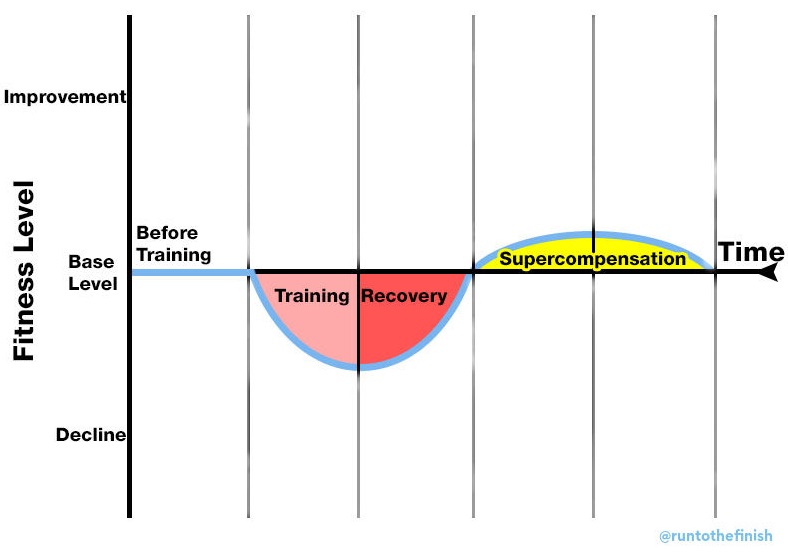
As with rest days during training, your body is using this time to build a new level of fitness.
If you shortchange the recovery period, then instead of adapting and gaining fitness you keep your body in that dip of training and recovery. This is when we start to see people feeling burned out and often leads to stress fractures about 3 months post marathon.
That’s right.
Usually the injury doesn’t pop up right away, it’s about 2-4 months post marathon when runners who did not take time off start posting to social media they suddenly have an injury.
No one connects the dots, but they’re there.
Great so if we know that a few weeks of not running is going to make us fitter and keep us from then being forced to takes MONTHS off of running and lose our gains, why can’t we just do it?
Why don’t we take time off post-race?
Our head gets in the way of what we know to be true. So let’s try to put to bed some of the post-marathon reasons you keep right on running.
Cruddy Race?
The race didn’t go our way and we want to try and cram another one in soon.
Listen, Amanda did this after Chicago. It was 80 degrees by mile 15, she switched to run/walk to just enjoy finishing. So she gave herself 10 days no running, then jumped into training for another race.
It was going ok generally, but her energy levels never quite came back and she made the smarter decision to NOT keep pushing. Amanda could tell she wasn’t even going to enjoy the next marathon if she kept going.
Fear of Weight Gain
You may have started running to lose weight and fear weeks of not running. Good news, now you can spend time lifting weights, which is going to change your shape and give you that metabolism boost of muscle you may have lost during marathon training.
Post marathon you may see some running weight gain, which is entirely related to inflammation from muscle damage.
Focus on eating for recovery and you’ll see that all drop off within the next 10 days.
Fear of Losing Fitness
It doesn’t disappear overnight and you shouldn’t be needing your body to run another marathon overnight.
That’s a crazy Shalane Flannagan goal after years and years of training or something that ultra runners do. The difference is a specific way of pacing yourself to be able to do the mileage over and over, which is not the goal of going out and running your marathon for a personal best.
Your time after the marathon is about regaining fitness you probably lost in other areas, like strength or the ability to do other sports that move your body more directions than forward.
Once you are ready to start building back, you’ll be surprised how much your body remembers and allows you to progress.
We Need the Endorphins
Running makes us happy, so we want to get out there. Especially when we’ve got some post race runners blues going on.
But if the run feels off or we get injured, there’s no real boost to be had. This is yet another opportunity to work on our mental game and find the balance of slowing down and the joy in that too.
All right, there is your full post-marathon recovery plan, and we hope there is enough logic to get you to follow through!
What to read next?
- Post Marathon Runners Blues: 7 Steps to Mental Recovery after a Race
- Running Recovery Tools: What Works vs. What’s Just Expensive Hype
- 15 Best Recovery Methods for All Athletes
Other ways to connect with Amanda
Instagram Daily Fun: RunToTheFinish
Facebook Community Chatter: RunToTheFinish
Sign Up to Receive a Weekly Newsletter with Top Running Tips and Laughs



 Knee Pain Home Treatment: 9 Expert Methods (Plus When You Need a Doctor)
This fits in so nicely with Tuesday’s planned post on inflammation!
Last year when we met Meb and Sarah Crouch, both of them told us that they don’t do anything for 2 weeks after a marathon. Everyone wants to train like an elite but they don’t want to recover like one…
you are 100% right!!!
What about a marathon as part of a 50k training plan? My schedule calls for running again the next day, and regular running for the next 3 weeks before the 50k
If the marathon is a training run then it’s more about picking the appropriate pace on race day :) so don’t over race it, just use it as training and stick to the next day nice easy run.
Hey Amanda- what should recovery look like if you are doing back to back challenge weekends at RunDisney? (Wine & Dine 2-course and Infinity Gauntlet) thanks!
Great question – from folks I’ve coached, we usually focus on ensuring you are eating anti-inflammatory meals in between, wear compression right after the race, if you can get a massage go for it around Wednesday and try to just walk or bike between the two to keep legs loose, but allow recovery.
These are great tips, thanks so much!
I sat so much traveling home after my first half marathon, I was sore for days. Now I make sure I’m up and moving after a race so that doesn’t happen.
I love this, thank you! What about after a half marathon? Would it just be 7 days then? Same recovery schedule?
Rule of thumb is 1 day off per mile raced. It all depends on how long you’ve been racing!