

While most runners understand that post race they need time off to recover, many skip using a recovery week during training to maximize results.
What if I told you that taking a step back and intentionally reducing your training load could actually lead to greater gains? Welcome to the world of deload weeks, aka down weeks in running or cutback weeks, a strategic approach that enables you to optimize your performance, prevent injuries, and ignite long-term progress.
These are planned periods throughout training that allow the body to adapt to the training stimulus.
Stress + Rest = Growth, which for runners means that your weekly training with long runs, speed workout and strength is the stress.
In order for your body to fully adapt, repair and grow from the breakdown it requires rest. That’s why we have rest days and cutback weeks. So today we’re going to fully explore what we mean by deload weeks for both running and strength training, how to incorporate them and all the benefits.

What is Down Week in Running?
Picture this: you’re in the midst of a rigorous strength training routine or training for an upcoming marathon. You’ve been consistently hitting the gym or pounding the pavement, and you’re feeling invincible.
However, as the weeks go by, you start to notice subtle signs of fatigue, decreased motivation, and even a plateau in your progress. This is where deload weeks come to the rescue.
By strategically incorporating scheduled periods of reduced intensity and volume, you can supercharge your gains, enhance recovery, and perform better on race day!
Whether you’re engaged in strength training or pounding the pavement as a runner, the principles of deloading remain the same.
How to Incorporate a Deload Week
Down weeks are naturally programmed in to nearly every training plan created by a running coach. For runners this usually occurs every 4th week (i.e. 3 weeks on, 1 cutback week) when in a race training cycle.
During that week we generally see a 10-40% reduction in training volume from highest of the previous few weeks. We are also usually dropping the total volume of intensity.
How this all comes together is going to vary a lot based upon current fatigue levels, current volume and training experience.
- Newer runners may drop all speed workouts for optimal recovery. Especially in marathon training the goal is first to build endurance, so we want to prioritize recovery for the long run days.
- Experienced runners may keep one short speed work session or opt for none if cumulative training fatigue is high.
- Masters runners or those who are more injury prone, dealing with chronic illness may do better with every 3rd week (i.e. 2 weeks hard, 1 cutback week).
One of the best ways to explain why we do this is the term supercompensation.
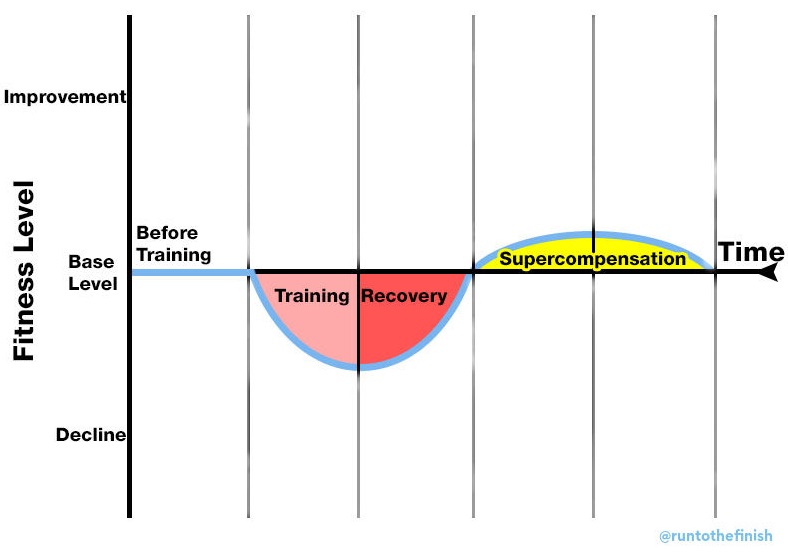
Supercompensation is a fundamental concept in exercise physiology that describes the body’s response to training and recovery. When we engage in physical activity, whether it’s strength training or endurance exercise like running, our bodies experience a temporary state of fatigue and stress.
However, with proper recovery, the body adapts and becomes stronger to better handle the demands of future training sessions. As the body recovers, it not only returns to its pre-training state but actually exceeds it.
This adaptive process is known as supercompensation.
Incorporating a Down Week in Marathon Training
The biggest thing that holds most runners back is a fear of losing fitness by taking time off. But that’s just not how the body works, so instead let’s look at ways you can maximize these deload weeks to come back the next week feeling ready to tackle even harder training and getting that supercompensation effect.
In fact, this is part of the same thing we are trying to achieve in taper when we come down from your highest weekly mileage in the last two weeks before the race.
Here’s a breakdown of how to include a deload week in your marathon training plan and what it might look like:
- Timing: Plan your deload week strategically, typically around every 3-4 weeks of intense training. Early in training when you are base building or between races, you may only deload every 6-8 weeks if you aren’t doing a lot of intensity.
- Reducing Mileage: During the deload week, aim to reduce your overall running mileage. This reduction can range from 10% to 30% of your regular training volume, depending on your fitness level and training intensity. For example, if you were running 40 miles per week, you might aim for 20-30 miles during the deload week.
- Lower Intensity: Focus on incorporating lower-intensity workouts during the deload week. Replace high-intensity interval training or tempo runs with easy-paced runs. This allows your body to recover while still maintaining your running routine.
- Cross-Training: Use the deload week as an opportunity to engage in cross-training activities that complement your running. This could include swimming, cycling, yoga, or rowing. Cross-training helps to maintain fitness, improve muscle balance, and reduce the repetitive impact of running.
- Active Recovery: Embrace active recovery strategies during the deload week. This can involve foam rolling, hip mobility, or incorporating recovery tools like compression boots. These activities aid in muscle recovery and help alleviate any accumulated fatigue. This is also your chance for an extra rest day if you have been feeling run down.
- Mental Rejuvenation: Use the deload week as a chance to recharge mentally. Engage in activities that bring you joy, such as spending time in nature, practicing mindfulness, or pursuing hobbies outside of running. This mental break is vital for maintaining motivation and preventing burnout.
Note this is not a rest week!
We aren’t taking complete time off of running every third week, that’s not a great way to see progress. It’s just a week of training that beginners to elite athletes use for long term success.
Remember, the specific details of your cutback may vary based on life, health, training history, and goals. It’s important to listen to your body and make adjustments as needed.
The primary objective of a deload week is to provide your body with the necessary recovery and adaptation time, so you can return to your regular training routine feeling refreshed, revitalized, and ready to conquer your marathon goals.
Example Cutback Weeks
50 mile week experienced runner:
- Drops to 35 to 43 miles
- Long run drops from 20 miles to 10-12
- Include some intensity like goal pace running in the long run and strides after an easy day
30 mile week newer runner:
- Drops to 17 to 24 miles
- Long run drops from 10 miles to 4-6
The % drop is higher on lower mileage to get the reduction we want for maximum benefits.
Benefits of a Deload Week
In strength training, deload weeks offer a chance for your muscles, joints, and connective tissues to recuperate from the intense stress and strain of heavy lifting. This reduction in training volume and intensity allows for adequate recovery, preventing the risk of overtraining, diminishing performance, and potential injuries.
Similarly, in running, deload weeks play a vital role in sustaining optimal performance and injury prevention. Endurance training places a significant demand on your cardiovascular system, muscular strength, and overall endurance.
By incorporating regular deload weeks, you give your body a chance to repair and rebuild, reducing the risk of overuse injuries, improving running economy, and maintaining mental freshness.
Deloading also helps to prevent burnout, ensuring that your passion for running remains ignited throughout your journey.
- Reduces risk of injuries from overuse.
- Increases motivation for the following week of harder training.
- Reduces issues from accumulating fatigue.
- Encourages better sleep as cortisol levels drop.
- Restores glycogen levels to prevent muscle being used for fuel.
- Restoring hormonal balance if you’ve been training hard.
- Creates a long term plan that’s sustainable.
All right there you have it! Reasons why you can’t just keep pushing harder and harder week after week. It’s really important that you not only utilize your rest days, but these deload weeks to get the most out of your training long term and for a specific race!
Looking for more training tips?
- Runner Strength Training Programs
- Marathon Pace Chart
- Sub 4 Hour Marathon Training Plan
- Does Running Burn Fat?
Other ways to connect with Amanda
Instagram Daily Fun: RunToTheFinish
Facebook Community Chatter: RunToTheFinish
Sign Up to Receive a Weekly Newsletter with Top Running Tips



 Bruised Toenail: Causes, Treatment, and How to Run Again