

Foam rollers for runners all have the same basic structure, but they’re not all made the same. If you’re an athlete, especially a runner, you’re probably looking for ways to adequately recover after a training session to be able to take on the next challenge!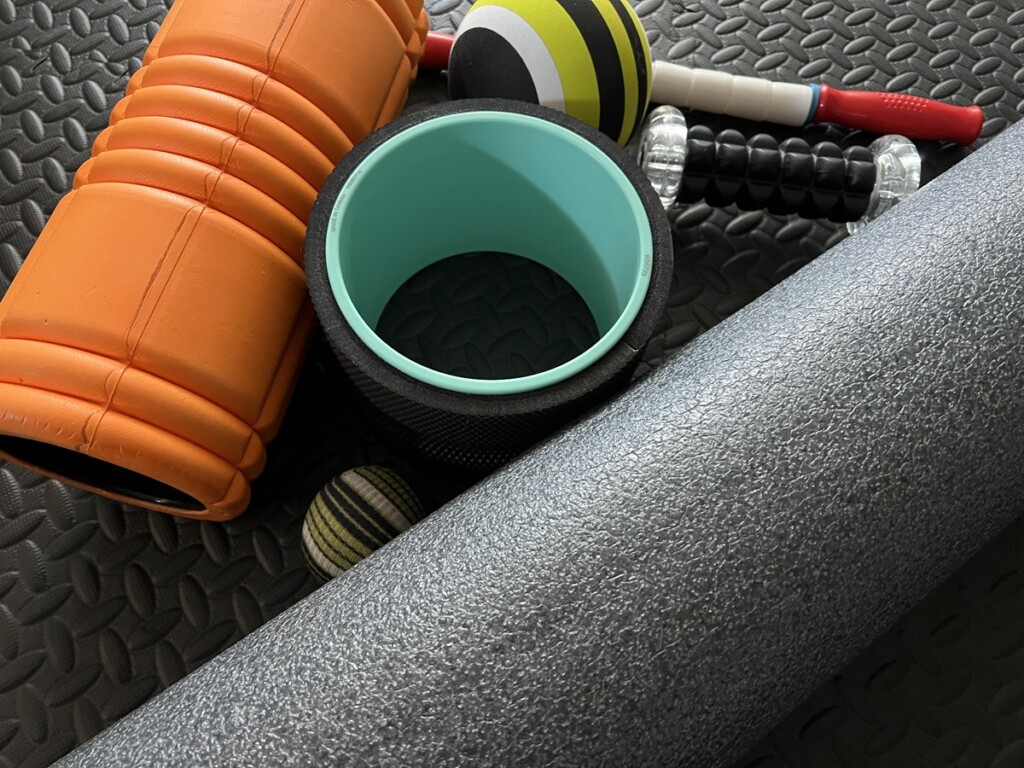
When it comes to foam rolling, it’s a pain most runners know all too well now…the pain that you first avoid, then slowly find yourself craving.
Foam rolling, it’s just like running! But the best foam roller for runners may not be the same for everyone.
Is Foam Rolling Good for Runners?
That’s a question I’ve answered in depth with tips on how to foam roll to relieve IT Band pain, along with tips on hitting all the other major areas…suffice it to say, YES.
Foam rolling when done correctly is great for runners.
8 Best Foam Rollers for Runners
So, which foam roller should you actually buy?
Most of us wind up with quite the collection, to the point where it looks more like a PT office than a home gym.
Our team has tested everything from basic $10 foam rollers to high-end vibrating models costing well over $100. Some have become staples in their recovery routines, while others rarely make it off the shelf.
To help you skip the trial and error, we’ve rounded up the foam rollers we keep reaching for.
#1 Best Overall Foam Roller for Runners TriggerPoint GRID Foam Roller ($37)
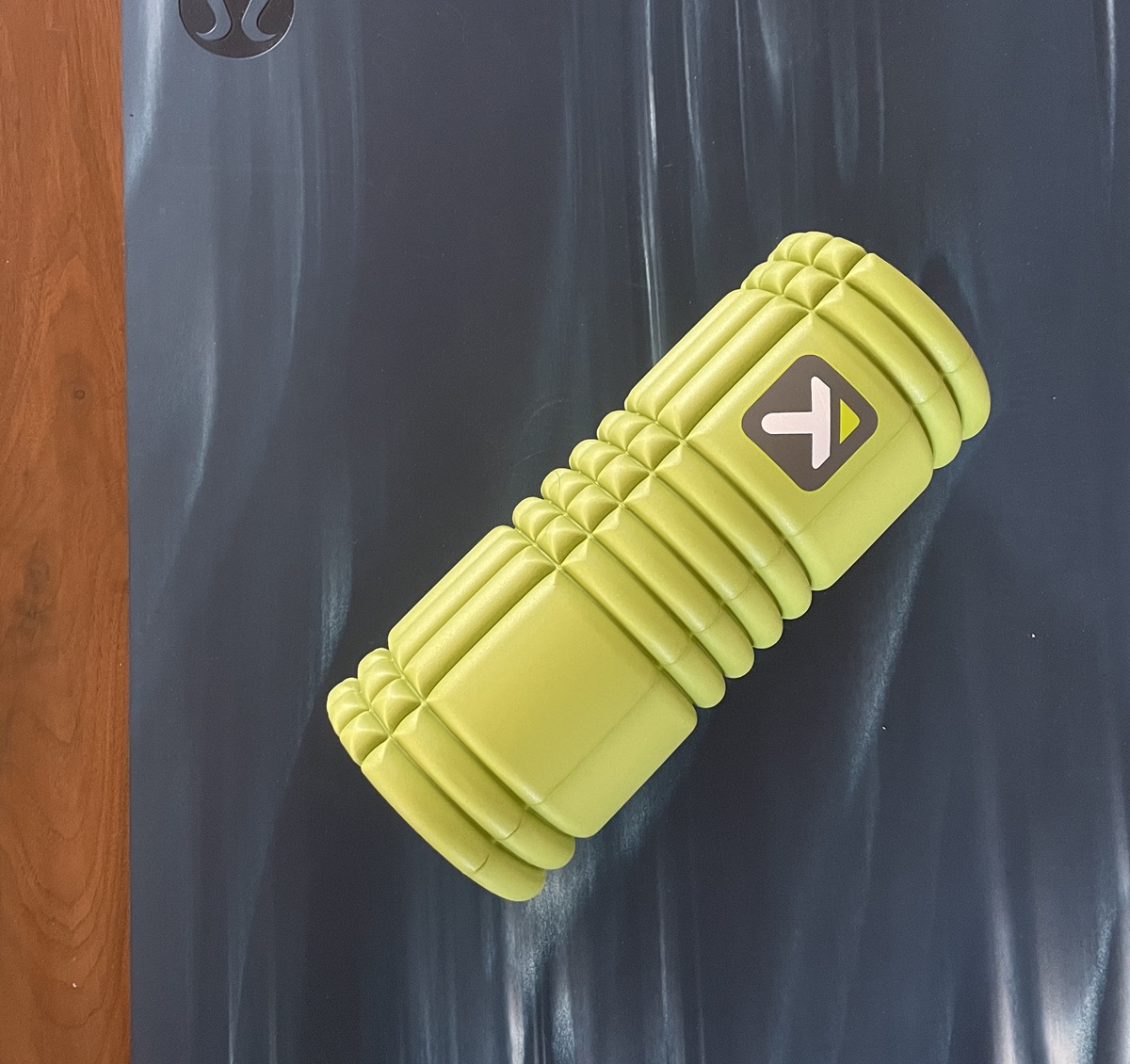
We mention the Trigger Point by brand because it is one of the most commonly carried in running stores and recognizable with its bright orange patterned surface leaving some to wonder if it’s different from the regular foam roller. It is!
The multi-density exterior foam of the TriggerPoint GRID covers a hollow, rigid core that helps it retain its shape even when used very regularly.
We don’t recommend this as your first foam roller because you may simply find it too intense. But over time it’s a great tool and one that actually sits in our living room for us both to use daily.
#2 Best Standard Foam Roller for Runners
Amazon High Density Foam Roller – 24 inches ($16)
Amazon High Density Foam Roller – 36 Inches ($25)
We have a couple of what you’d call “standard” foam rollers in different lengths….because yes we have far too man recovery tools. But also because length and feel are things to consider in your pick.
A standard foam roller is a great place to start because it may feel slightly less intense than the firmer Trigger Point.
Things you need to know:
- Using a foam roller daily it will slowly breakdown, like the cushion in your running shoes (higher density rollers last longer). The Trigger Point will last even longer with the hard plastic interior.
- We think it’s perfection to have multiple for different uses
- We keep one in the living room and both use it every single day because it relaxes our back after sitting at a desk all day
- We keep another where we do my daily dynamic warm up and where we lift weights
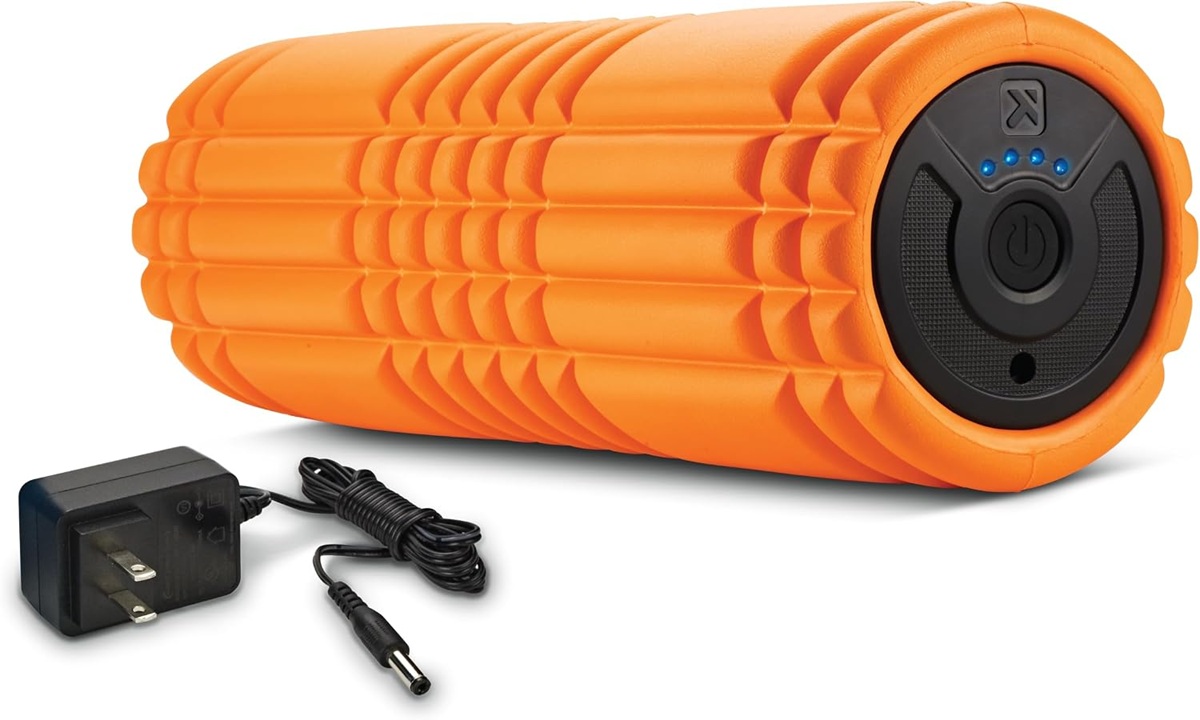
#3 Best Vibrating Foam Roller – Trigger Point Grid Vibe Plus ($103)
I really am a fan of Trigger Point products. They last.
I’ve had my grid roller and PT balls for years and years. Even with daily use, they have maintained their firmness, unlike the above standard foam rollers which can break down.
HyperIce is the most well known name in this space of Vibration and therapy. It’s also the priciest at $199.
Having reviewed them alongside other rollers, it’s definitely a great product, but honestly all of these rollers are very similar. So it’s up to you if you feel that brand offers something you simply like better.
#4 Best Calf Massager for Runners – Massage Stick ($25)
The Massage Stick was actually one of the first tools Coach Amanda was introduced to during my marathon training in 2005!!
No one was foam rolling back then, but we were carrying around sticks even when the airports started asking if they were weapons.
Our team LOVES the stick for working on tight calves and inner thighs.

However, it doesn’t let you get your shoulders, sides and back the way you can with the foam roller…yup just another reason we have so many “tools” in our house to keep me running straight.
It’s on the best foam roller for runners list because it might actually serve you better than a roller that isn’t portable or doesn’t hit your key spots.
#5 Best TFL, Deep Glute and Foot Massager for Runners
We know this was supposed to be about the best foam roller for runners, but we believe that massage balls serve the same purpose; they just happen to be smaller.
Yoga tune up balls were the start of this new trend, which are now pretty standard tools for anyone looking to get in deeper on a knot.
- the small Trigger Point ball for digging in to my glutes, tight TFL and great for those with plantar fasciitis
- the larger Trigger Point ball for rolling my abdomen (read why)
- a double ball (often called a peanut) for shoulders and neck
These balls are going to get much deeper, so be prepared to hold yourself up to reduce pressure as you get used to it and of course they too are much easier for traveling.
Things to Consider When Picking a Foam Roller
Now, all foam rollers are made for the same purpose. You’ll find different foam rollers on the market with varying features. Here are the four things to keep in mind when picking the right foam roller for you:
#1 Firmness
Foam roller density refers to how firm it’s going to feel. In other words, it will have less give and therefore feel like it’s digging in to your muscles deeper.
We like a high density foam roller 90% of the time. It’s what we need to actually get the job done of working through that fascia and sending the signal to our brain to release the muscle tension.
BUT, someone like my Dad does better with a roller like this that is slightly softer which is also the kinds of rollers you’ll usually see at Target or Wal-Mart. If you’re just starting out or working through an injury that might be a better bet for you as well!
Starting out with a softer roller means you will actually use it because it doesn’t hurt so bad and simply doing it is better than having a roller that never gets used!
Just remember these rollers break down faster and if it’s too soft you aren’t actually working anything. Plan to use it for a year and then upgrade to a higher density foam roller.
#2 Texture
The other factor that will determine the intensity is the texture of your foam roller. A perfectly smooth roller will feel a lot more gentle than one with deep ridges.
If you’re looking for deep tissue and muscle massage with myofascial release, you’ll want to go for a foam roller that’s firm and has a bumpier texture.
There are often three different surface textures designed to mimic a massage therapist’s hand. Each serves a very specific purpose. Let’s look at what these are:
- High and firm squares: These are on each end and in the middle of the foam roller which works the muscle tissues like the fingertips.
- Long tubes: The tubular design runs in rows around the TriggerPoint GRID which acts like fingers to provide more contact when rolling.
- Low flat patches: Flat zones are meant to mimic the palms of a therapist’s hand to provide maximum surface area while rolling.
As you can see, the density and cross-hatching marks allow it to get much deeper in the tissue.
#3 Portability
Foam rollers come in different sizes some smaller 12-inch ones, to longer 36-inch ones. I recommend picking a size depending on whether or not you intend on taking it out with you. You can also buy a collapsible foam roller to make it more portable.
We love the longer ones because you can lay on it and spread your arms out to the side which opens up the chest, after it gets tight working on a computer all day. This is going to help improve your breathing on the run!
You’re going to have all the same benefits as a short roller, but with some added movements you can do on it like chest opening or even some core workouts.
The short roller obviously takes up less space and maybe you’ll find it easier to maneuver, but if you only want one…go long. 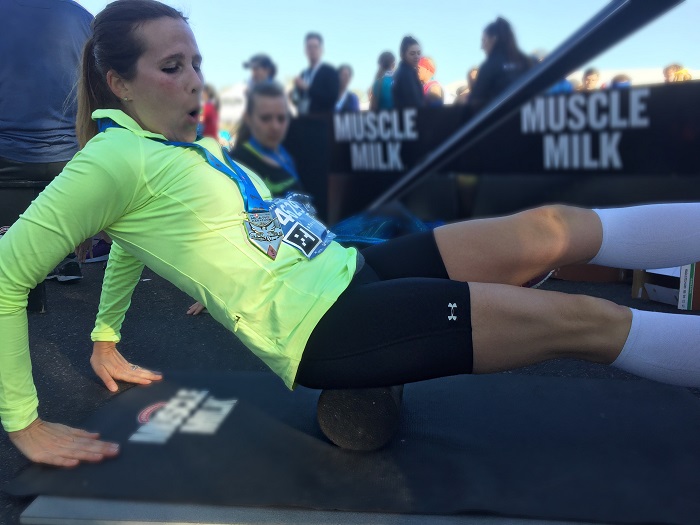
#4 Extra Features
Many foam rollers now come with added features such as different vibration settings as well as added heat for an added level of muscle activation. You’ll see below that vibration can be very good for dealing with pain or helping to work in to a muscle.
Things like heat can also help to relax muscles.
Do You Need a Vibrating Foam Roller?
Need is a strong word. Want, probably because it’s fun and we’ve already discussed my love of all things pre-hab to keep me running injury free.
Brands report that the vibration helps to break up the fascia even further. I think this is partially because the vibration distracts the muscle and allows you to stay on a spot longer to work in to the tightened area.
- I do love the vibration for warming muscles up PRIOR to a workout.
- I don’t in general like it when people roll immediately after a workout because they don’t stay on spots long enough or are simply rubbing inflamed muscles.
- Whole Body Vibration has been shown to increase blood flow, which does help with muscle recovery. Does this apply to just vibration in a specific area, the science is still out.
- We know that the vibration helps to stop pain signals, which could mean you tolerate this better than a standard foam roller.
Types of Foam Rollers
These days there are foam rollers for just about every recovery goal. Here’s a quick breakdown of the different types before we list out some of our favorites
A smooth roller is a great place to start if you’re new to foam rolling or just want something for everyday use. If your muscles are feeling especially tight, a textured roller can apply a little more targeted pressure.
Vibrating rollers take things a step further by combining pressure and vibration, while multi-density rollers offer different levels of firmness depending on where you’re rolling.
If you prefer more control, a stick roller lets you target smaller areas, such as your calves or hamstrings, without having to sit on the floor. Plus the stick is super easy to travel with!
And don’t overlook a mini roller. They’re lightweight, easy to pack, and perfect for traveling or tossing in your gym bag. Plus, if you’re putting it in a carry-on, it also doubles as a storage space.

The truth is, there’s no absolutely best foam roller for every runner. Think about how you’ll actually use it.
If you’re consistent with a basic smooth roller, that’s going to be more beneficial than buying the fanciest top-of-the-line recovery tool that ends up collecting dust.
Massage Stick vs Foam Rollers
Both massage sticks and foam rollers can be incredible for recovery, but they’re both used differently.
A massage stick is smaller than a foam roller and resembles a rolling pin. It consists of a bar with one-inch rollers attached to it which allows it to move easily over the body.
Massage sticks are usually also able to flex slightly, allowing them to better fit the shape of the body.
When it comes to myofascial release, both massage sticks and foam rollers provide similar results but the method to use them differs. Unlike a foam roller that you roll on top of, the stick must be pushed into the muscle with your hands.
This means you’ll use using your arms instead of your body weight to use the massage stick.
A massage stick is usually used on the leg muscles, but it works well on smaller areas like the neck and upper back as well. It’s available in a variety of lengths and is small enough to travel with.
How to Use a Foam Roller?
Foam rollers can change your life if you do it the right way. It can be used on the front, back, and sides of the legs to improve blood flow, and increase range of motion and flexibility while reducing muscle soreness.
To use a foam roller, position it beneath the affected area you’re targeting and move over it slowly. As the roller moves, stop at tight points and spend some extra time there.
The only area that’s generally recommended that you should avoid is your knees. It can be used in most other areas of your body, including the arches of the feet to provide release after a run.
Read my complete foam rolling guide for runners with demo video >>
This was a TON of information on the best foam roller for runners. I hope you are now ready to grab one and get to work on those muscles!
Looking for what to read next?
- The Truth About Waking Up Your Glutes | What Runners Get Wrong About Glute Activation From a PT
- Core Strength for Runners: The Foundation Every Fast Runner Builds On
- iFit Review | An Honest Perspective from Treadmill, Bike and Strength Usage




Very good information Amanda I have been using a lower density foam roller for years and never
really gave it much though, but you are correct that it no longer has the same effectiveness. Reading
your blog made it an easy choice for me to upgrade to a trigger point foam roller. I am not sure if the
vibrating foam roller is for me, but maybe one day I will make the jump. Keep up the good work.