
Finding the right shoes and feeling comfortably supported should be your top priority if you have flat feet.
One of the things that lead to injury for many runners with flat feet is overpronation, which is when the arch falls in causing the ankle to roll in as well, sending strain up to the knee and hip. The best running shoes for flat feet can help with this, so today we’re going to look at what’s recommended and what to look for.
As always, we’re also a big proponent of learning to do exercises that will help your body become stronger and not rely on the shoe to do things for you.
If you don’t, then over time you’ll create new areas of weakness and only mask issues for a little while. Flat feet are one exception because it’s usually a structural issue and not, say, weak hips.
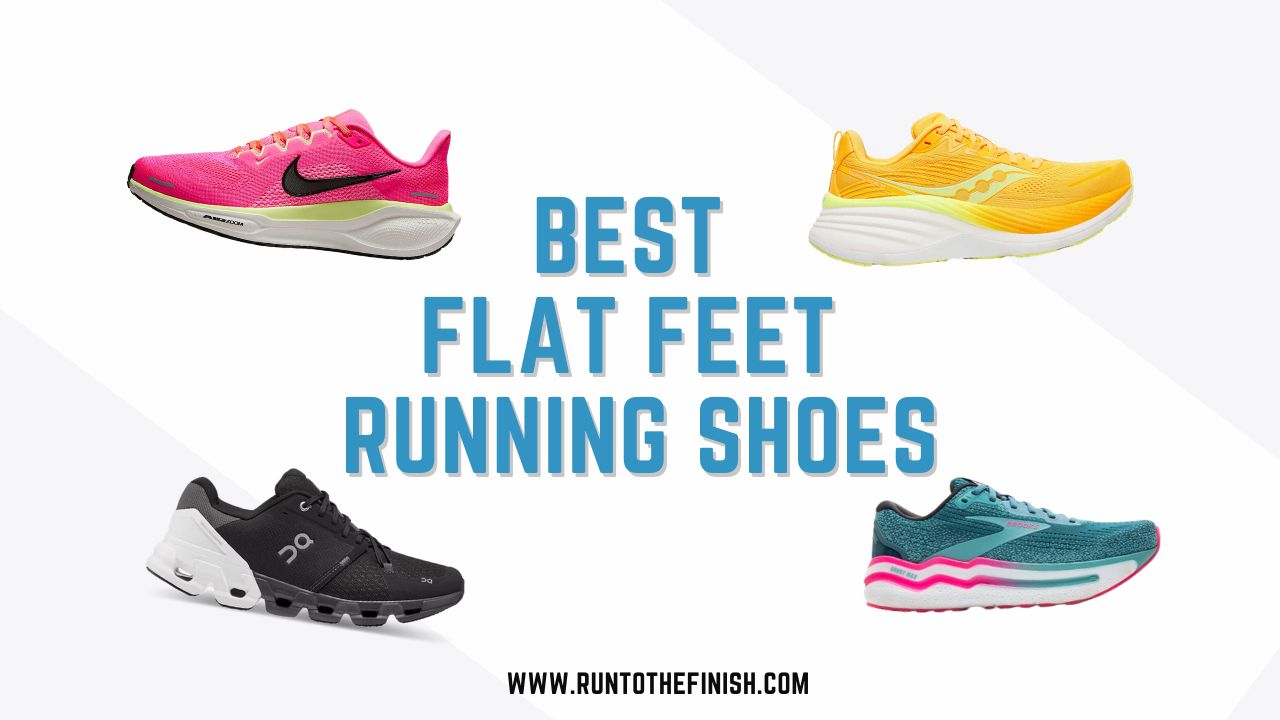
There’s a previous article with all the exercises and tips you need to know about running with flat feet. But today, we’re diving into our team’s top recommendations for the best running shoes for flat fe
Do Runners with Flat Feet Need Stability Shoes?
Let’s start by saying that having flat feet does NOT automatically mean you need stability shoes.
Flat feet, also known as fallen arches, means that the entire sole of the foot touches the ground when standing.
It’s actually more common than many runners realize; studies have shown that approximately 27% of the population has flat feet, so if this is you, you’re not alone! That’s over 1/4 of folks out there.
Many runners with flat feet naturally overpronate, meaning their feet roll inward after landing. For some runners, this isn’t a problem at all. For others, that extra movement can place additional stress on the ankles, knees, and hips, sometimes leading to discomfort while running or walking.
That’s why there’s no one-size-fits-all answer when it comes to choosing a running shoe.
The most important thing is finding a shoe that fits your foot well and feels comfortable. Some runners with flat feet prefer a neutral shoe, while others feel better with a little extra guidance or support.
If you’ve already found a shoe you love but wish it offered a bit more support, a running insole is also worth considering before buying an entirely new shoe.
Types of Flat Feet
Before your start shopping for running shoes, or really any shoes, it helps to know that not all flat feet are the same.
There are two main types: flexible and rigid flat feet.
A quick way to tell the difference is to look at your foot while standing and then again while standing up on your toes. Does an arch appear, or does your foot stay flat the whole time?
Flexible Flat Feet
This is the most common type of flat feet. An arch is present when your foot isn’t bearing weight, but flattens once you stand.
- An arch appears when the foot isn’t weight-bearing
- The arch flattens when standing normally
- The foot has more natural movement
- Some runners do great in neutral shoes, while others prefer a little extra support
Rigid Flat Feet
With rigid flat feet, the arch doesn’t appear whether you’re sitting, standing, or on your toes.
- Little to no arch is visible in any position
- The foot has less flexibility and movement
- This type is less common than flexible flat feet
- Can cause some pain/discomfort during activities
7 Best Running Shoes for Flat Feet
It’s important to not only know what type of flat feet you have, but to also consider how your entire body moves. This includes your hips, knees, and range of motion. If you only focus on the feet rolling in due to flat feet, but actually have week hips then you may find they continue to roll in despite adding more arch support.

Best Running Shoes for Flat Feet and Overpronation – Asics Gel Kayano
The Asics Gel Kayano is an excellent choice for those with flat feet or who tend to overpronate. This means the shoe is going to feel a bit firmer to provide that support on the inside of your foot to keep it from collapsing inward.
These shoes offer superior support to reduce fatigue, as well as a secure fit that won’t slip or slide while in motion. On top of that, the heel-locking system helps keep your foot in place providing even more stability and comfort on longer walks.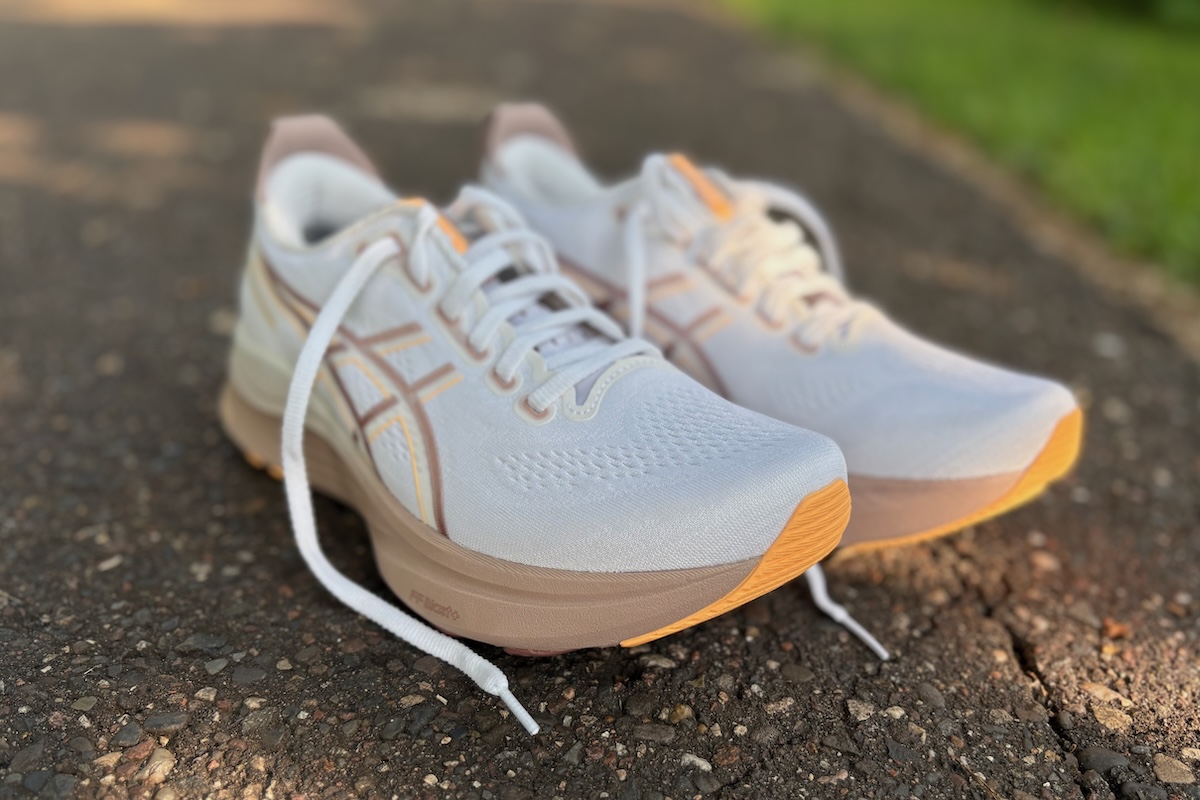
The stability of the Kayano 32 comes from the 4D Guidance System, a pod designed to adaptively respond as you hit the ground. This plus the wider base make the shoe a good ride for neutral and overpronaters alike.
The ASICS GEL Kayano was first released in 1993 and due to its popularity is now on the 32nd edition!
Trust me, these are incredible shoes that are especially ideal for anyone with flat feet.
- Weight: 10.7 oz Men’s, 9.1 oz Women’s
- Stack Height: 40 mm
- Heel Drop: 8 mm
- Available in 9 colors
- Available in wide and narrow
- Available at Asics.com for $165.00
- Check out our full review of the Asics Gel Kayano 32 here >>
New Balance for Flat Feet- New Balance Ellipse
While New Balance is largely known for having extra widths to accommodate wider feet, they do have a great option for flat-footed runners as well.
The Ellipse is not trying to reinvent the daily trainer. It is trying to make everyday running feel smoother, easier to wear, and easier to keep on your feet before and after the run too. For a lot of runners, it delivers.
The Fresh Foam X here feels tuned for comfort first. It is soft enough to take the edge off tired-leg running, but it does not cave in.

This shoe is best for easy runs, recovery days, and the in-between miles that make up most training weeks. I also found myself grabbing it for longer walks and casual wear when my legs were cooked, which honestly says a lot about the kind of comfort it offers.
- Weight: 9.6 oz Men’s, 7.7 oz Women’s
- Stack Height: 37.9 mm heel
- Heel Drop: 8 mm
- Colors: Wide range of colorways for men and women
- Available in wide: Yes, standard fit and wide fit (2E)
- Available at newbalance.com for $144.99
- Read our full review of the New Balance Ellipse here >>
Best Neutral Running Shoes for Flat Feet- Ghost Max 3
Brooks has several running shoes that offer great stability, including the super popular Brooks Adrenaline GTS, but specifically for flat feet, there’s a lot of hype around the Ghost Max 3.
While this is not a stability shoe, it’s going to offer a naturally stable feel with moderate (but firmer) cushioning, making it a good choice for anyone who already loves the fit and feel of a Brooks shoe.
Brooks upped the cushioning here and used nitrogen-infused DNA LOFT v3 foam in the midsole to help provide a softer landing. But keep in mind that this will not have that max cushion feel

How is this different from the Ghost? Well, max generally means we’re getting a bigger stack height so they can shove in a lot more cushion and it will feel softer underfoot. Again, the word softer here is a different feeling from what you would get from a shoe like the New Balance 1080.
The Ghost Max 3 is going to feature the GlideRoll Rocker to help that heel to toe transition feel more natural. This is going to be an especially great shoe for long hours on your feet, whether at work or walking on vacation!
- Heel toe drop: 6 mm
- Weight: 9.7 oz women’s, 10.8 oz men’s
- Stack: 39 mm
- Available in 9 colors
- Available in Wide and Extra Wide in select colorways
- Available from Brooksrunning.com for $150
- Read our full review of the Brooks Ghost Max 3 here >>
Best Neutral Running Shoes for Flat Feet- Nike Pegasus 42
The Pegasus remains a well priced daily trainer that is going to be extremely durable, carry runners through a lot of easy miles without feeling heavy or clunky. It’s not a max cushioned soft trainer, that goes to their Vomero line up, and it’s not a speed workout shoe, but it can pick up the pace.
Nike is leaning hard into the idea of “more energy return” with the Pegasus 42, thanks to a full-length Air Zoom unit.
Everyone wants the bounce or cushion right now, but I love that the Pegasus is staying true to this line of shoes. It’s got plenty of tech in it and looks flashy, but really, it’s a great basic daily trainer.
Unfortunately, the fit of the 42 is a little different from previous models due to the last.
The last is what the shoe is built on and thus changes the fit of the shoe. By adding more cushion under the forefoot the shoe now felt too small and way too tight through the toebox.
The Pegasus is a long time shoe for Nike, which to me is always a signal of a great model.
- Weight: 10.6 oz Men’s, 8.6 oz Women’s
- Stack Height: 37 mm
- Heel Drop: 10 mm
- Colors: 6 colors
- Available in wide: Yes for some colors
- Available at nike.com for $145
- Read our full review of the Nike Pegasus 42 here >>
Nike has a great return policy, so I like to buy direct. Then you can go for a few runs and return if it feels awful.
Best Running Shoes for Flat Feet and Plantar Fasciitis – Saucony Hurricane 25
For many years I ran nearly every race in the Saucony Kinvara, which is the polar opposite of a stability shoe. It’s a more low profile minimal shoe and yet I see many folks with low arches end up in a shoe like this. It might initially feel good to not have the arch support, but your body will thank you for picking a shoe with it.
The Saucony Guide often comes up for stability, but the Hurricane is going to provide you with the most support for flat feet.

The Saucony Hurricane 25 is the most well-cushioned and stable daily trainer from Saucony. It includes their premium foam and is an impressive shoe that combines plushness and responsiveness.
- Weight: 10 oz Men’s, 8.8 oz Women’s
- Heel drop: 6 mm
- Stack Height: 38mm
- Available in wide
- Available in 8 colors
- Available at saucony.com for $165
- Check out our full review of the Saucony Hurricane 25 here >>
Best Wide Toe Box Running Shoes for Flat Feet- Hoka One One Arahi 8
The Hoka One One Arahi 8 is an excellent example of how stability shoes can still feel lightweight and responsive without feeling clunky or bulky.
If you’re a runner with slightly wider feet, this might be the best shoe for you with its open construction and roomy forefoot section. It’s definitely one of a kind when it comes to stability shoes with its lightweight construction and responsive cushioning.
Hoka switched from J-Frame stability to H-Frame stability technology. This shifted the support from just the medial side (or inside) of the foot to both the medial and lateral sides allows the shoe to keep the material directly under the forefoot and heel making it a more balanced and less stiff ride, great for overpronators.

This shoe is great for easy and long training runs, especially with extra space in the toebox.
Even with an additional 3mm of foam from previous models this shoe felt light and had a little bounce to it— if you’re someone who needs a lot of support and prefers a more rigid shoe, this might not be the choice for you.
- Weight: 9.8 oz Men’s, 7.7 oz Women’s
- Stack Height: 39 mm
- Heel Drop: 8 mm
- Available in 6 colors
- Available in wide and extra wide
- Available on hoka.com for $150.00
- Check out our full review of the Hoka Arahi 8 here >>
Best Running Shoes for Flat Feet and Overpronation – On Cloudflyer 5
The Cloudflyer 5 is a plush running shoe with enhanced stability. The parts beneath the shoe are wider than in previous models, and they’re designed to aid limit inward rotation, making theCloudflyer ideal for persons with flat feet, overpronation, or who want a little extra support.

For even more support, the latest version also has a molded sockliner and a heel counter on the outside. We really liked this addition to the shoe and it’s a bonus if you’re someone that is on their feet all day.
One of the biggest changes is the removal of the speedboard polymer plate in the midsole. On decided to do away with this to help provide that plush feel.
Unfortunately, we just don’t agree with it being plush… maybe slightly softer than the 4. If you liked the Cloudflyer 4, chances are you’ll still be a fan of this one.
Just like the On website describes, the Cloudflyer 5 gives a “foot-hugging feel” straight out of the box.
- Weight: 8.8 oz women’s, 10.6 oz men’s
- Heel drop: 9mm
- Available in 5 colors
- Available from On Running for $170
- Read our full review of the On Cloudflyer 5 here >>
Types of Running Shoes for Flat Feet
It’s important to pay attention to the type of shoes that are most suitable for flat feet. You could also look to a good running insole for support if you’ve found a shoe that you already love the feel of, but aren’t getting enough support.
There are a lot of different types of running shoes. But two that podiatrists recommend for runners with flat feet to help prevent pronation.

Stability Shoes
Stability shoes are great for runners with mildly collapsed arches or those with flexible flat feet. These shoes prioritize providing extended support for the foot arch, without being too rigid which can put stress on the feet and knees.
They’re known to deliver sufficient arch support without the added stress, and more cushioning than a neutral shoe would offer.
Motion Control Shoes
These shoes are meant for runners who have severely fallen arches, or those with rigid flat feet. These shoes restrict improper movement when running and offer strong arch support.
They’re known to help alleviate pain and discomfort by giving the most amount of stability needed to minimize arch flex and inward ankle rolling, as is the case with severe overpronators.
It’s MUCH harder to find motion control shoes now. I generally do not recommend them to the majority of runners because they can be stiff and feel like too much correction.
Why It’s Important to Choose the Right Running Shoes for Flat Feet
We all want to be able to focus on enjoying our runs, and wearing the right footwear can help you do so by reducing pain and preventing injuries.
The best running shoes for flat feet are those that provide the necessary support and stability while also cushioning and protecting your feet from impact.
With the proper footwear, you can prevent overpronation. This happens when your foot rolls excessively inward during running, causing strain on your feet and legs.
The right shoes can not only help you avoid pain and injuries, but they can also help you run better. You may improve your running form and stride with the correct support and cushioning, which will make your runs more efficient and you’ll enjoy them even more!
Investing in the proper running shoes can have a significant impact on your running experience. With a good pair of running shoes, you can hit the pavement with confidence and relish in the benefits of running.
Here are some of the most important factors to consider when picking the right shoes for your flat feet:
Type of Flat Feet
Some runners have anatomically flat feet, while others experience ‘collapsed arches,’ when the arch collapses due to a lack of muscle strength. Even though the two can look very identical, the way you buy shoes for them is very different.
When it comes to shopping for a shoe for a flat-footed runner with collapsed arches due to muscle weakness, you can add arch support until the foot gets stronger and can support its own arch.
However, with an anatomically flat foot, arch support simply transfers tension to the knee, which can cause knee problems.
Before choosing a shoe, it’s important to know what kind of flat foot you have and how it affects your knees, hips, and range of motion, in addition to your foot.
Level Of Support
There are three main types of running shoes to choose from, namely neutral, stability, and motion control shoes.
Neutral shoes provide no extra support along the medial edge, so these aren’t a good option for flat feet. Stability shoes strike a balance between support and cushioning, and motion-control shoes offer great support and structure.
The design of motion control shoes places the foot in a more neutral position, allowing for a more efficient gait cycle when running or walking. These shoes are ideal for runners with severe overpronation.
But if your flat feet only cause you mild pain, you may want to choose a soft stability shoe that combines comfort and support. If you’re unsure of how much support you require, it may be helpful to consult a podiatrist to determine how the anatomy of your foot affects you while you run.
Shoe Fit
Flat feet are frequently associated with wide feet because the lack of an arch puts more of your foot in contact with the floor, resulting in a bigger footprint. Many people who have flat feet can benefit from wearing shoes with a roomy toe box such as wide running shoes.
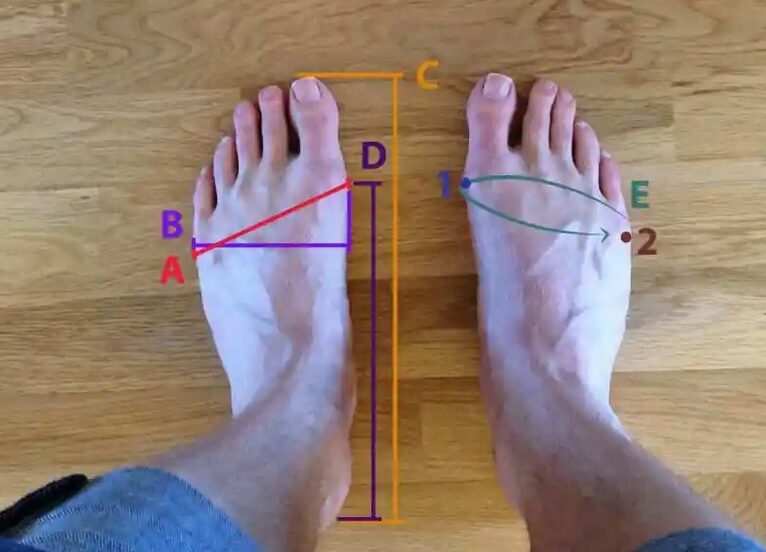
But you should still think about the shape of your forefoot, midfoot, and heel before buying a shoe. For instance, a significant amount of a shoe’s support comes from the heel, which maintains contact between the sole of your foot and the shoe. So, choose a shoe with a tighter fit if your heel is narrow to prevent it from rising and falling with each step.
Cushioning
The fact that you have flat feet does not mean you should avoid cushioning, but a stiffer shoe will often work better for you. But still, there are some runners with flat feet who like shoes with more cushioning and shock absorption because it makes them feel better.
You might be able to figure out what you like by looking at the shoes you wear every day, or you might have to try out different kinds to find the right amount of cushioning for you.
Running Insoles
As noted this is another really good option. In fact, David was resistant to changing shoes, but was starting to have Plantar Fasciitis issues and knee pain.
In testing a few different styles here is what we found:
- Superfeet provide a lot of support, but are very firm..
- VKTRY Carbon fiber insoles also provide a lot of support, plus the bonus of carbon fiber. Also very firm.
- Sole Medium insoles have been a really good light cushion, plus support
- Spenco is great for cushion, but low on the firm arch support (can be good if you don’t have completely fallen arches).

Low Arches vs. Flat Feet
Typically, these are used interchangeably, but it’s important to note that they’re not exactly the same thing.
If you have low arches, you still have an arch; it’s just lower than average. When you stand, you’ll usually notice an ever-so-slight curve along the inside of your foot.
With flat feet, there’s little to no visible arches when you’re standing. Instead, most or all of the bottom of your foot makes contact with the ground.
This visual helps explain what we mean here, especially when you take a look at a wet footprint.

We’ll say it again, neither one of these means you need a specific type of running shoe.
Some runners with low arches are perfectly happy in neutral shoes. The same goes for many runners with flat feet.
Others may prefer a shoe with a little more guidance or support. It really comes down to what feels the most comfortable on your foot and keeps you running pain-free.
If you’re not sure where your feet fall (no pun intended), don’t stress too much about the label. Focus on finding a shoe that fits well, feels comfortable from the first run, and keeps you excited to keep logging miles.
All right, there you have some of our top picks for flat feet running shoes. We hope this gives you a place to start your search.
Don’t be afraid to go to a running store and run around the block! Or truly checkout the return policy for many places. You will often be surprised to find that you could take them out for a couple runs and then return them because you don’t like the way they feel.
Looking for what to read next?
- 11 Best Wide Foot Running Shoes (Basics to 4E Fit)
- 10 Best Stability Running Shoes (For Every Type of Run)
- Best Walking Shoes For Flat Feet That Actually Provide the Support You Need



 Tracksmith Eliot Range Review: A Strong Trail Return That Needs Fine-Tuning