

As runners, we love data. Our watches and trackers now provide a plethora of info from pace to sleep to cadence and the list goes on. One particular piece of information we now have more access to is resting heart rate for runners.
Because we know running is both amazing for our cardiovascular system and a stressor on the body, this number has gotten a lot more attention in the last few years. I, for one, am THRILLED about this shift, because HR can tell us so much about how the body is feeling and guide our training.
Heart rate is one of the many data points and if you wear your GPS watch 24/7. There’s training HR, sleep time, sleep quality, heart rate variability, training status, pulse ox and VO2 Max depending on your watch and its related app.
Each piece of information has value when used appropriately in your training. Today we want to focus in on that resting heart rate variable.
As endurance athletes, many of us have noticed that our resting heart rate (RHR) can be quite low at times. It can often be disconcerting and leave us with questions. What’s a normal RHR? How low is too low? Why are there days when it seems elevated and days where it seems to be really low? And the list goes on.
In this article, we’ll explore the relationship between running and resting heart rate, when a low resting heart rate is good, and signs that it may be a problem.

Oh boy, this data on the Garmin Fenix was telling me so much about my training and recovery! Let’s dive in to it.
What is Resting Heart Rate?
Resting heart rate is the number of times your heart beats per minute (bpm) while you’re at rest. It’s an important indicator of cardiovascular health. Knowing your resting heart rate can help your doctor diagnose and monitor any existing or potential health issues.
The average adult resting heart rate is between 60 and 100 bpm according to the American Heart Association.
But you’re not average, right? ;)
How to measure resting HR?
To measure your resting heart rate, you should do this when you’re calm and sitting or lying down.
One of the best times to do it is first thing when you wake up in the morning before you get out of bed and get your day started.
To get that measurement, you can:
- Rely on your watch, another tracker, a heart rate monitor that you’ve worn overnight
- Do it manually by finding your heart beat either in the side of your neck or at your wrist using your index finger and middle finger. Count the number of beats for 30 seconds. Multiply that number by 2 to get your RHR.
How Does Running Impact Heart Rate?
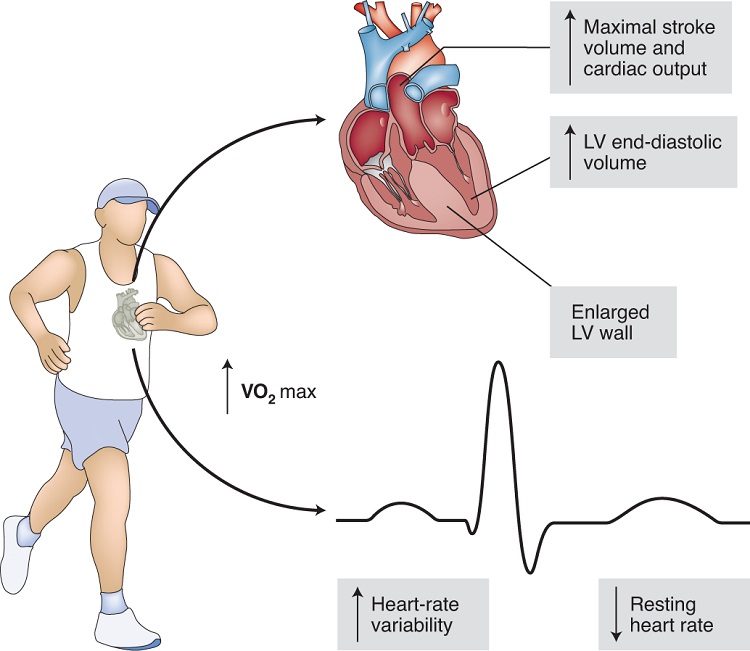
So, how does running impact resting heart rate? Several studies have shown that regular running can lead to a lower resting heart rate.
For example, a study published in the Journal of the American College of Cardiology in 2014 found that runners had an average resting heart rate of 59 beats per minute, compared to non-runners who had an average resting heart rate of 72 beats per minute.
Another study published in the Journal of Sports Medicine and Physical Fitness in 2017 found that after just six weeks of running, participants had an average resting heart rate that was 8.6 beats per minute lower than before they started running.
The reason running has such a significant impact on resting heart rate is because it’s a form of aerobic exercise. When you run, your heart has to work harder to supply your muscles with oxygen-rich blood.
Over time, this constant demand for oxygen causes your heart to become more efficient at pumping blood, which leads to a lower resting heart rate.
Additionally, running can also help reduce inflammation, improve blood pressure, and increase the flexibility of blood vessels, all of which can contribute to a lower resting heart rate.
Resting Heart Rate for Endurance Athletes
As an endurance athlete, especially if you monitor your RHR and keep tabs on the data from your watch, you may notice that your RHR is below the range of 60 to 100 bpm for the average adult.
For some athletes and runners, especially marathon runners, this number may drop into the range of 30 to 40 bpm. This is especially common when sleeping or when you’ve been relaxing on the couch for awhile with a good book or movie.
This can seem scary, especially if it’s something you’ve never paid attention to before. And it’s not uncommon for Dr’s to be concerned about it until learning you are an athlete.
And the good news is that a lower RHR is usually a good thing!
Elite Runner Resting Heart Rates
- Eliud Kipchoge – 33 beats per minute (bpm)
- Mo Farah – 33 bpm
- Paula Radcliffe – 38 bpm
- Galen Rupp – 38 bpm
- Haile Gebrselassie – 42 bpm
- Shalane Flanagan – 44 bpm
- Meb Keflezighi – 49 bpm
- Kara Goucher – 49 bpm
What a Low Resting Heart Rate Means
So let’s say you have a lower normal resting heart rate. What does that mean? Well, in most cases it means you’re healthy!
Endurance exercise strengthens our heart making it more efficient. This means our heart muscle is able to pump more oxygen rich blood and to our muscles in fewer beats.
Our goal isn’t to get your HR as low as Eulid, but there are benefits to getting below that average of 60 to 100BPM. So focusing on smart training is 100% worthwhile both for the impact on performance and health.
There are a number of things that can affect what your average RHR is, as both an athlete and an average person.
What Impacts Resting HR?
- age
- sex (females often have a slightly higher heart rate than males)
- fitness level
- genetics
- how much physical activity you get
- the weather (too hot or too cold can both increase it)
- stress (good and bad)
- weight
- medications, including things like beta blockers, inhalers and more
In a review of studies examining endurance sports, strength training, and yoga and their effects on RHR found that all impacted resting heart rate in a positive way.
However, endurance sports and yoga had the most significant impact on RHR, decreasing it in both sexes.
What a Rising Resting HR Means?
The photo above of my rising resting heart rate is a great example of how this data can be useful. This is a quick way to see that my body is now working harder.
That could be because you’re in a heavy training block and need to put more emphasis on sleep, rest, fuel, hydration, overall recovery.
It could be an early sign that I’m dealing with an infection or an injury. In both cases, the body is going to work to deal with the issue and that means more energy than you’d normally be expending. Thus creating a higher resting HR.
All of this can be really valuable to help guide your training. In my case, it was a sign I needed to take a few more easy days before any hard workouts to get things back in line.
How Low is Too Low When it Comes to RHR?
As I mentioned, a lower RHR is generally a good sign. It means you’re in good physical condition and your heart is strong and healthy.
But there are times when your heart rate may be too low and it’s a sign of something else. These include a heart condition or overtraining.
Overtraining
One issue that a low RHR can signal is overtraining and/or underfueling. I’ve previously done an article on signs of overtraining, but I do want to share a few key points here related to this.
Overtraining is characterized by fatigue, decreased performance, and burnout. Continuing to push through the signs and symptoms of overtraining can lead to performance plateaus and decreases.
Signs of overtraining include sleep issues, thirst issues, feeling slow/weak, aches and pains, burnout, abnormal heart rates, mood swings, appetite loss, and loss of period. You can read more about these in my other article, but I want to touch on the heart rate symptom again here.
When overtraining, you may see either an abnormally elevated heart rate or a reduced heart rate as a result of the stress you’re inflicting on your body due to exercises.
For example, you can’t seem to get your HR to rise during a workout. Or you notice that it’s much lower than normal during your workouts.
If you’ve been tracking your RHR for awhile and notice your RHR in the morning is elevated, it may be a sign to prioritize rest or lower the intensity of the workout planned for that day.
This kind of thing will be easier to notice if you make tracking your RHR a habit, especially during training cycles. I would encourage you to do that, especially if you’re training for some upcoming races.
Heart Concerns
Regardless of whether you’re a seasoned athlete, a nonathlete, or new to fitness, a low RHR accompanied with additional symptoms might mean you need to head to see a doctor.
Again, while most low RHRs are not a cause for a concern, consult a doctor if you have a low RHR accompanied by:
- Fainting
- Dizziness
- Weakness
- Heart palpitations
- Chest pain
- Low energy
- Shortness of breath
These could be signs of what’s known as bradycardia (RHR below 60 bpm). The other end of this spectrum is tachycardia (RHR above 100 bpm).
A low resting heart rate can also be a sign of a more serious underlying condition, such as hypothyroidism or anemia. Anemia is a particular concern for female athletes due to the monthly loss of iron and often the drive to lose weight leading to underfueling.

What Should Your Heart Rate Be When Exercising?
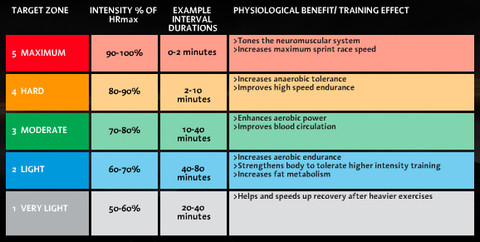
Determining our heart rate zones for exercising can be helpful, but again is dependent on a lot of the factors that influence our resting heart rate so keep that in mind.
Using heart rate training can be helpful for some people (others find it stresses them out).
It can help you control your pace on days when you should be running easy, which is a lot of the time. And it can also show you how hard you’re working during those tough workout days like when you have speed work or hill repeats.
To determine your maximum heart rate and subsequently your heart rate zones, there are a couple formulas/cacluations which are all roughly the same in terms of accuracy (none are perfect).
One of the ones most commonly used is to subtract your age from 220 to find your max heart rate. From that you can calculate your training zone 2 for low intensity easy days.
This is an estimate, which is something to keep in mind when looking at heart rate zones. Depending on your type of tracker, it may generate zones for you.
In the end, it’s important to understand that as an athlete you may have a lower resting heart rate than the average person, and that’s in all likelihood a sign of overall good health.
Keeping track of your RHR can be beneficial to maintaining your health and also positively impact your training ensuring you stay injury free.
Looking for more training tips?
- Best running shoes for shin splints
- What to do if you have a High HR while running
- Best Marathon Training Plans Reviewed
- How to calculate your max heart rate, to correctly set your zones.
Other ways to connect with Amanda
Instagram Daily Fun: RunToTheFinish
Facebook Community Chatter: RunToTheFinish
Sign Up to Receive a Weekly Newsletter with Top Running Tips and Laughs



 9 Must Do Training Tips for Older Runners
Great article! I would emphasize that you tell your healthcare providers about your lower resting HR if you have no ‘Heart Concerns’ symptoms listed above. I have had several incidents where providers over reacted and scared me (and my spouse) because they assumed that I had a heart problem. An example is after a surgery, the hospital ‘risk management’ doctor would not discharge me due to the low HR (low 40’s) until I saw a cardiologist – the next day. He confirmed that my heart was healthy and the HR normal.