
We’ve all seen commercials and social media ads that show athletes crushing a beer after working up a sweat. Sometimes nothing tastes better after a run than an ice cold beer. And for many people, there’s no better way to wind down at night than with a good glass of wine, especially if we had a good training session that day.
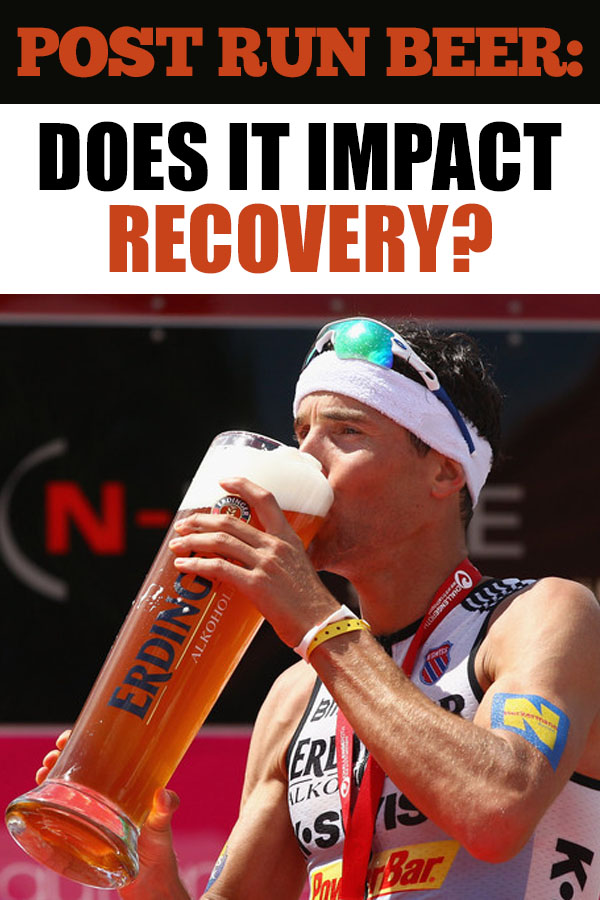
But if we’re serious about achieving our running and fitness goals, is that a problem? Is it okay to drink a beer after a workout? More specifically, does alcohol impede our recovery and ultimately stand in the way of our progress?
In this article we take a look at what your body is tasked with when you consume alcohol, and what those processes mean in the grand scheme of your running.
Since you all know I don’t drink, I’m happy to have Holly from The Run Experience here to talk on a topic that I know will interest so many of you, alcohol after working out!
The Relationship Between Alcohol & Exercise
Studies have shown a positive relationship between physical activity and alcohol consumption. This means that, of those who drink, those who exercise are more likely to consume alcohol than those who don’t.
Why?
There are some chemical explanations proposed in the article linked above, but psychologically it’s fair to say we just want to reward ourselves with that post-run beer, glass of wine, whatever it might be.
And that’s totally fine! We’re not focused on whether you can or can’t drink, that’s your call! Our focus is on recovery nutrition for runners, as we want to keep you moving, especially during those heavy training cycles!
We’re taking a look at what goes on internally when you drink, and how that affects recovery. This way, you’re informed, and can reward yourself in a way that doesn’t set you back as you gear up for your next training session or race.
Impacts of Drinking Beer After a Workout
Having a cold one post-workout isn’t just about the immediate satisfaction or the relaxing effect. The impact of alcohol on your body extends far beyond hydration concerns. From how your body sources its energy to the quality of rest you get at night, alcohol has an incredible impact on your body. Let’s find out more about how alcohol affects your body after a workout.
1. Alcohol’s Effects on Hydration
Having a beer or mixed drink after a long run might seem refreshing, but when it comes to hydration, alcohol is probably not giving you that rehydration we know is a priority..
When you sweat, you’re losing water and electrolytes that your body needs to replenish. Normally, consuming liquids helps you rehydrate, but not all liquids are created equal.
Alcohol is a diuretic, which means it increases the amount of water your body eliminates through urine. This can lead to dehydration, especially if you’re already running on empty after a workout.
It doesn’t stop there, though. Dehydration can mess with your body’s ability to regulate temperature and even impact your cardiovascular function. Both are pretty crucial when you’re trying to get the most out of your running routine.
When you lose fluids through increased urination, you’re also losing valuable electrolytes like potassium and sodium, which are key for muscle function and hydration.
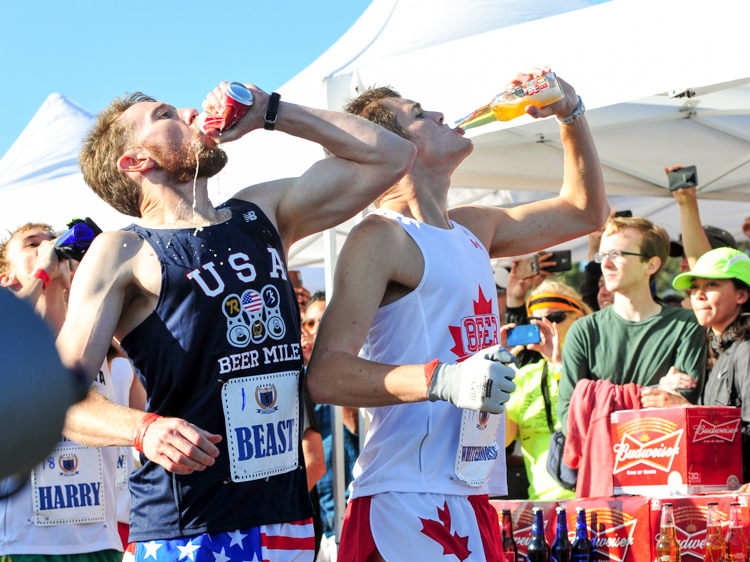
2. Alcohol’s Effect on Energy
Alcohol gets processed by the liver, and this is our body’s first task when we have a drink. That processing requires energy in the form of glucose, our body’s principal energy source.
Because of this, you definitely want to stay away from consuming alcohol during your training session or run. Your body needs that glucose to fuel your muscles and get you through your workout, so don’t let alcohol steal it!
To explain this, let’s look at where our body gets its energy.
You may have heard that “fat is fuel,” which is only partially true. That glucose energy comes mainly from complex carbohydrates, with fats and proteins serving other purposes, and only assisting in the energy department if they’re needed.
Carbohydrates break down into glucose immediately, giving us ready-to-use fuel. The fats, on the other hand, get stored away and used for other things, such as muscle movement and managing inflammation.
The body can turn fat into glucose if and when it needs additional fuel, but fat is not our primary energy source, and ideally we’ll get our energy from carbohydrates, and let fats do their other jobs.
But our ready-to-use glucose runs out a lot faster if the liver is using it to process alcohol, so save your supply for its real goal in a work out – fueling your muscles. That way, that balanced diet you worked so hard to create can accomplish all it needs to, and your meal prepping wasn’t for nothing.
3. Alcohol’s Effect on Recovery
Okay, so now we know, from an internal standpoint, why we shouldn’t drink before or during a training session. But once we’re done, why not?!
And as we said before, we’re not here to tell you “no.” However, just be aware of some of the negative consequences, particularly if you’re trying to build muscle or recover from an injury.
Alcohol affects our protein synthesis.
After a training session, our body utilizes protein to rebuild itself, and to adapt to what we’re demanding of it while training. Alcohol can impede that process, and make it much harder for our muscles to rebuild.
How many beers hurt muscle growth? Since everyone metabolizes alcohol differently, the amount of alcohol that impedes muscle gains will be different for each person. Studies have shown that alcohol—even when consumed along with protein—reduces muscle protein synthesis after exercise.
We also know that alcohol freezes muscle growth if you’re consuming it on a regular basis. So if you’re working hard to build speed or strength, or to make any real changes in the gym, be mindful of your alcohol consumption.
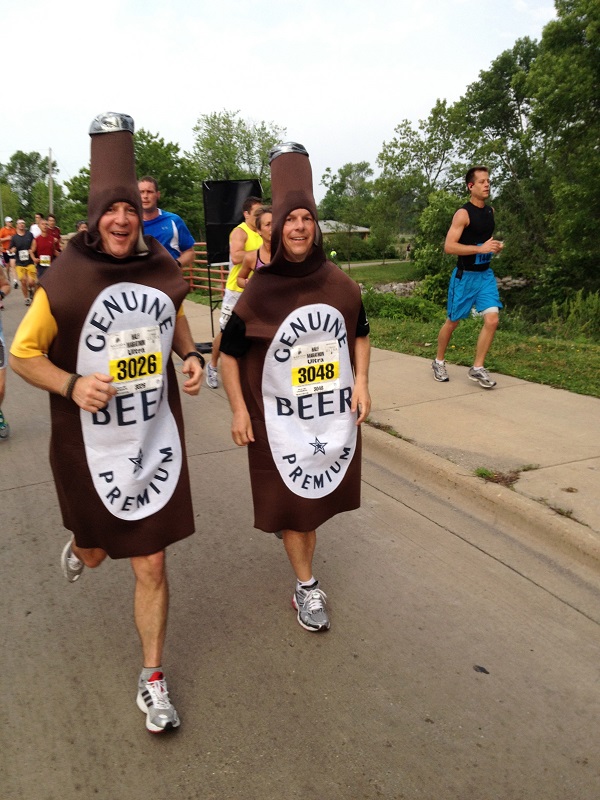
4. Alcohol’s Effect on Injuries
Alcohol is a vasodilator, which means that it increases blood flow.
While this isn’t always a bad thing, it can make injuries worse. It does this by either increasing swelling at the site of injury, or by numbing pain you would otherwise feel.
Swelling is your body’s way of protecting the injured body part. By compressing nerves around the injured area, which makes you feel pain, your body prevents you from using the injured body part.
Prolonged swelling, however, can decrease a muscle’s ability to activate, so we want to be sure we’re not encouraging prolonged swelling through regular alcohol consumption.
The other way alcohol can impede recovery is by numbing some of the pain you feel. I’m sure we’ve all felt alcohol’s “numbing” effect before. This can be dangerous for our training because it might encourage us to push through and train on an injury that’s not ready for it.
Your body is smart, and sends you natural indicators of when it needs a break – i.e. pain and swelling.
So again, just be aware that regular alcohol consumption can affect your ability to feel those natural cues, and it may lead you to make decisions your body doesn’t exactly agree with.
5. Alcohol’s Effect on Sleep
Sleep is a key ingredient in muscle repair and muscle growth. More specifically, deep sleep is crucial for those processes.
While alcohol makes us feel tired, it actually interrupts our deep sleep. One or two drinks likely won’t affect this, and you’ve probably felt how just one or two drinks just sort of mellows you out.
But three or four drinks can actually hinder your deep, beneficial sleep, so try to limit the post-run drinks to just one or two, so that your sleep schedule works for you, not against you.

Alternatives to Alcoholic Drinks Post-Workout
We want you to enjoy a recovery drink that is delicious but also supports your fitness goals.
While alcoholic beverages might be tempting in some situations, we’ve learned that they can interfere with recovery. Luckily, there are plenty of alternatives that can hydrate and replenish your body if you do decide to refrain from alcohol after a run.
The most common is probably having sports drink for post-workout recovery. These are specifically formulated to rehydrate and replenish electrolytes. They often contain carbs to help replenish spent glycogen stores and sometimes have added proteins to aid in muscle repair.
For those who still crave the taste of beer without the side effects, non-alcoholic beer is an increasingly popular option.
Many brands now offer versions with reduced calories and no alcohol, making them a guilt-free alternative. Some studies suggest that non-alcoholic beer can provide polyphenols and may even support immune health, which is an added bonus.
Final Verdict on Post-Workout Beer?
We say, reward yourself!
You deserve a treat after a tough run, a killer training session, a great race finish, whatever it may be.
With this information, you’re now aware of what goes on in your body when you have a few drinks. And with that information, you can make more informed decisions as to how and when you reward yourself with alcohol given your particular goals.
When not to drink after a workout?
If you’re working hard in the gym to build muscle or speed, if you’re recovering from an injury, or if you’re working to improve your sleep habits, keep in mind that regular alcohol consumption will likely get in the way of achieving those goals.
But like we said, there’s nothing wrong with treating yourself. Make smart decisions around how and when to do it, and there should be no reason you can’t make progress toward your goals, and have some fun along the way!
Thanks to Holly for this info!!
Holly Martin is a San Francisco-based running coach and personal trainer. With a 20+ year background in dance, Holly brings a strong focus on technique and mobility to all of her coaching. Currently, she trains clients at Midline Training and Nfinite Strength, and coaches online with The Run Experience, an online training community for running training program and workouts. She enjoys writing tips for running to help you become a better, stronger and injury-proof runner.
Other ways to connect with Amanda
Instagram Daily Fun: RunToTheFinish
Facebook Community Chatter: RunToTheFinish
Get more running tips: Pinterest



 The Best High Protein Cookie Dough (Super Easy Recipe!)
I’ve never been a fan of the post-race beer. Most of the races I run are in the morning and I don’t want to drink in the morning. Plus it’s just not really “worth it” to me to get a beer after a 5K. It would basically replace the calories I just lost!
I see mostly donuts at the 5k, ha!! and yup not worth it
Just a quick note- the first picture used in the article is a man chugging an alcohol free beer. It is considered isotonic and not such a bad choice of recovery drinks… and non of that pesky alcohol!
Super cool, thanks for letting me know!! I don’t drink beer, so it all seems the same :)
Not a beer drinker at all, but I do love a glass of wine! I wish more races offered both :-)