

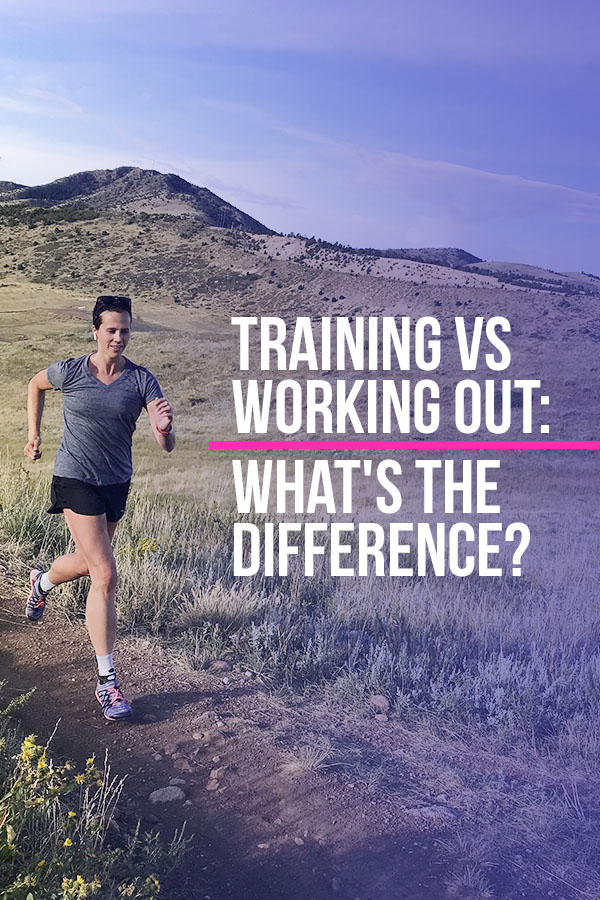
Does it matter if you are training or working out? I would say it absolutely matters if you want to see progress towards any specific goal. But if you’re simply just wanting to be active, then it all counts! Let’s dig in to more of how this might impact you. “I train so that I can…”
How would you complete that sentence?
In my early twenties I would have said something like, “I workout so I can eat pizza.” And let’s be honest, there’s absolutely no shame in that!
But as life went on and I became more focused on running, the script flipped to “I TRAIN so I can PR”.
It still took a few more years of running for my mindset to shift away from a calorie goal or even a clock goal to a larger goal of feeling like I was doing my best. Some days my best is a slow plodding couple of miles, but other days it’s a glorious couple of hours where my body just seems to flow.
Of course, those glorious hours don’t happen by magic, they happen from training!
On one vacation, my husband and I walked over 100 miles around Europe, plus biked 40 miles and I ran another 15 miles. None of that was training, it was just enjoying our lives. BUT, training is what made it possible for us to get up day after day feeling good, excited and wanting to keep going just a bit more.
So what is the difference between training and working out?
What is really comes down to is your mindset. It’s not necessarily WHAT activity you’re doing or WHERE you’re doing it, but WHY. Training is all about working towards a prescribed, long-term goal.
Is There a Difference Between Working Out and Training?
This is actually one of the most common questions we get from brand new runners. And the answers is absolutely, yes; there is a difference.
When you’re working out, you might be doing some squats at the gym, going for a run or riding your bike, or maybe doing a yoga class because you feel like you should and and you want to stay active. Working out is more about general fitness like burning calories, or staying fit.
Training, on the other hand, is about meeting a long term, specific goal. And yes even weight loss or building muscle falls in to this category because you absolutely must follow a progressive overload program!
For runners, this is usually something like running your first marathon or hitting a PR. You’re following a specific training plan to take your fitness gains to the next level.
What is Considered Training?
When you’re training, you have a focused and structured approach to meeting your fitness goals.
Training:
- is well planned out. You’re following a specific training program created by a coach or personal trainer. A good training plan is backed by science. There’s a rhyme and reason to the length, timing, and type of exercise you’re doing.
- has a specific purpose. There’s an end goal in mind, such as increasing your speed or endurance, running your first marathon, or building more lean muscle. Athletes follow different training plans based on their current fitness goals.
- is varied. Your training sessions have different purposes. Some days may call for speed work to get your heart rate up and improve your pace, while other days may call for cross-training at a lower physical effort to improve flexibility.
- is balanced. A good training plan has balance between training days and rest days, which allows for proper recovery while still staying on track and building consistency.
What is Considered Working Out?
Working out is a more random approach to exercise, and usually because you have a goal of upkeeping your overall health.
Working out:
- might be sporadic. You may show up at the gym or go for a workout when you feel like it, rather than adhering to a specific fitness routine.
- is either spontaneous or repetitive. Since you’re not following an actual plan, you’re likely just showing up and deciding what to do on the spot, rather than knowing what you plan to work on ahead of time. On the other hand, without a prescribed training program, you might end up just doing the same thing over and over again every time you go to the gym or go for a run.
- can feel like a chore. You show up and do a cardio workout because you had too many cocktails at happy hour earlier in the week. (This is not a thing, by the way. You can’t “undo” bad eating/drinking habits by exercising.)
- is NOT pushing yourself. If you’ve been weight lifting for a year and never increased your weight or reps, or you’re always keeping your intensity low during your cardio sessions, you’re likely in a working out rut and probably not noticing any muscle gain.
Is Working Out Instead of Training Bad?
Not necessarily.
Training is going in to each run or workout with a focus and a goal, while working out is focusing mostly on the sweat simply because it’s something you want to do, it generally feels good, you’re in between plans.
Doesn’t make one better than the other, but the mindset of training is far more enjoyable.
Regular exercise is never a BAD thing, and you don’t necessarily have to follow a specific training program if you are focusing on a goal maintaining overall health. And you can still have a plan in place without necessarily training for something like a race.
But going for a random jog here and there or even strength training consistently without a plan, isn’t moving you towards any fitness gains.
For runners—especially those of us who run regularly and want to see improvements in our pace and distance—working out without a training plan can lead to injury and burnout.
What is a Fitness Training Session?
If you’re heading to the gym and working with a personal trainer, or simply going on your own and aren’t sure what it should entail, here’s a quick run down.
Your training session, should be part of a larger plan.
The workout will have a specific purpose both within your week of training and your current training cycle. That means it could be an upper body focused lifting day because you are doing lower body the next day or it could be a cutback week in training all together.
Based upon your goals the training session should include:
- Warm Up – great time to use mini bands to wake up the muscles and get everything activated
- Base Lifts – You want to start with your big foundational movements to have the most strength
- Supplementary lifts – These are often secondary exercises to focus on smaller muscles or burn out what you have just been lifting
- Cool down – If you aren’t doing any cardio work, then the cool down is time for stretching to begin the recovery process. There is some great data that post lift stretching can increase muscle strength gains!
Ideally we like to see cardio and strength training workout done at separate times of the day if you are doing any high intensity training. If you’ll be doing a long incline walk, then you can do that prior to the cool down.
Why Runners Need to Train
Running when you aren’t doing any sort of cross training is a recipe for disaster.
Running a race when you haven’t been putting in the miles is disappointing.
Running when you aren’t fueling your body well is a downward spiral.
To be a better runner, you need to train, and here’s why:
Performance: If you have specific running goals, training is non-negotiable. A good training program gradually increases your endurance, improves your running efficiency, and helps you become faster and more resilient.
Injuries: Running without a plan increases your risk of overuse injuries. Training requires varying your workouts, which includes incorporating rest days and cross-training days. This helps build strength and flexibility and reduces the risk of injuries.
Fun and Motivation: A good training program can be incredibly motivating. It’s one thing to run aimlessly; it’s another to run with a purpose. Whether you’re having fun running fartleks, enjoying a long run, or jogging with a pal on an easy day, having specific targets keeps you focused, motivated, and enjoying the process.
Recovery: A good training plan isn’t all about exertion; it’s also about recovery. Learning the right way to recover, including nutrition, hydration, and rest, is crucial for long-term running success. Training plans ensure you can run harder and longer without burning out.
Components of a Good Training Plan For Runners
There are all different kinds of training plans for runners, depending on what your goals are. There are beginner, intermediate, and advanced plans for just about every race distance, training for pace or for distance, training by heart rate, and even training plans based on your age.
But all good training plans have a few things in common:
- a variety of runs: include long, slow runs for endurance; tempo runs for speed; interval training for improving pace; and easy runs for recovery.
- strength training: includes exercises focusing on the core, legs, and upper body to enhance your running performance and ensure your body can handle the stress of repetitive impact.
- flexibility and mobility work: regular stretching and mobility exercises help maintain a good range of motion in your joints, reduce muscle tightness, and decrease the risk of injuries.
- proper rest and recovery: Rest days are a crucial part of any training plan. They allow your body to recover and adapt to the stress of training, preventing overtraining and injuries.
- personalization: the plan should be tailored to your individual goals, fitness level, and lifestyle.
Here are some of my favorite training plans:
- Base Building Plan: for developing strength and endurance as runners
- How to Combine Running and Weight Lifting
- Couch to 5K and Couch to 10K: for beginners who want to run their first 5K or 10K
- 4 Hour Marathon: for marathoners who want to improve their time
- Half Marathon Training Plans: multiple plans for those aspiring to run 13.1
In training, we have a goal to work towards and instead of “having to workout.” We’re choosing to show up and get fitter with every session. That mindset just feels pretty fantastic.
Other ways to connect with Amanda
Instagram Daily Fun: RunToTheFinish
Facebook Community Chatter: RunToTheFinish
Get more running tips: Pinterest



 Skip These Workout Hair Mistakes to Prevent Breakage
I train to race well and for the challenge of sticking with a goal long after the excitement fades and things get REAL! I love it for all the things you mentioned and it’s truly just a part of my life now.
Those trail shoes look amazing!!! They make me want to do another trail race…
This is interesting and I actually find the opposite. When I’m training with a specific race in mind every workout I do is geared towards it, and training becomes a means to an end- I am only ‘working out’ for the sake of the run I’m aiming towards and it can become very tedious. After a very disappointing result in a race a few months ago, I’ve tried to change my mindset, I now try and enjoy every workout for what it is, irregardless of the effect it may or may not have on my running. I don’t ‘workout’ for the delicious meal I might get afterwards, I workout for the love of challenging myself and improving my fitness, strength and mental health. This shift in focus from ‘training’ has given me a new love for the workouts I do, and ultimately has helped me improve my running without me really having to focus solely on it. For me this is much healthier and more satisfying.
I run year round without having a race on the calendar. I think I still look at is as training because I’m choosing to do it, not forced to do it. Most of the time, I hear people complain about working out, as it’s only a means to weight loss. But really semantics!