

The quest to run without getting tired is a common challenge among runners of all levels. Whether we simply want to go farther without feeling out of shape or we want to try our hand at a new race distance…the challenges in running are never ending!

There’s no secret hack that makes every run feel effortless, but there are a few strategies that can help you build up your endurance.
Whether you’re just getting started and want to stop feeling wiped out after a mile, or you’re a more experienced runner chasing longer distances, the right approach can make your miles feel smoother and more doable.
In a previous article, I talked more specifically about what endurance is and endurance vs stamina. But I know breaking it down into our top 10 tips will make it feel less overwhelming. So that’s exactly what you’ll find below.
10 Tips For How to Run Without Getting Tired
First things first, these tips won’t turn things around after just one run. Building endurance takes time, and that’s completely normal.
Plenty of runners start out struggling to make it to the end of the block, then go on to finish a half marathon or even a full 26.2. (you don’t HAVE to go run these longer distances to be a runner!!) But that kind of progress doesn’t happen by overnight, it comes from showing up consistently and training smart.
Here’s what I’ve learned through years of running and coaching. These things really do help if you’re willing to give them a try.
1. Build a Strong Foundation
Before you can go the distance, you need a solid base. Running without getting tired doesn’t happen by accident; it’s all about building a strong base. Think of it like laying the groundwork before you try to build anything big.
If you’re wondering how to run without feeling wiped out all the time, the secret isn’t some magic workout, it’s building your aerobic base. That foundation is what helps your body deliver oxygen efficiently to your muscles so you can keep going without hitting a wall.
Running farther without getting tired doesn’t happen overnight. It takes consistency, patience, and a smart approach to training, not just pushing harder every day. Doing too much too soon is one of the fastest ways to burn out or get injured. And once you’re sidelined, it’s a lot harder to stick with your goals.
Which leads us to point number 2.
2. Learn How to Run EASY
Learning how to correctly do a low-intensity run is surprisingly hard. Most of us go out too fast in the first mile (or the first block) and find our heart beating super fast and our breath becoming ragged. Instead, we need to find the right pace (or effort) for easy runs, which should make up 80-90% of your miles.
We often call this our conversational pace. In other words, could you speak a sentence or two without gasping?? This is also called RPE scale or rate of perceived exertion and we want that to stay around a 4 on a scale of 10.
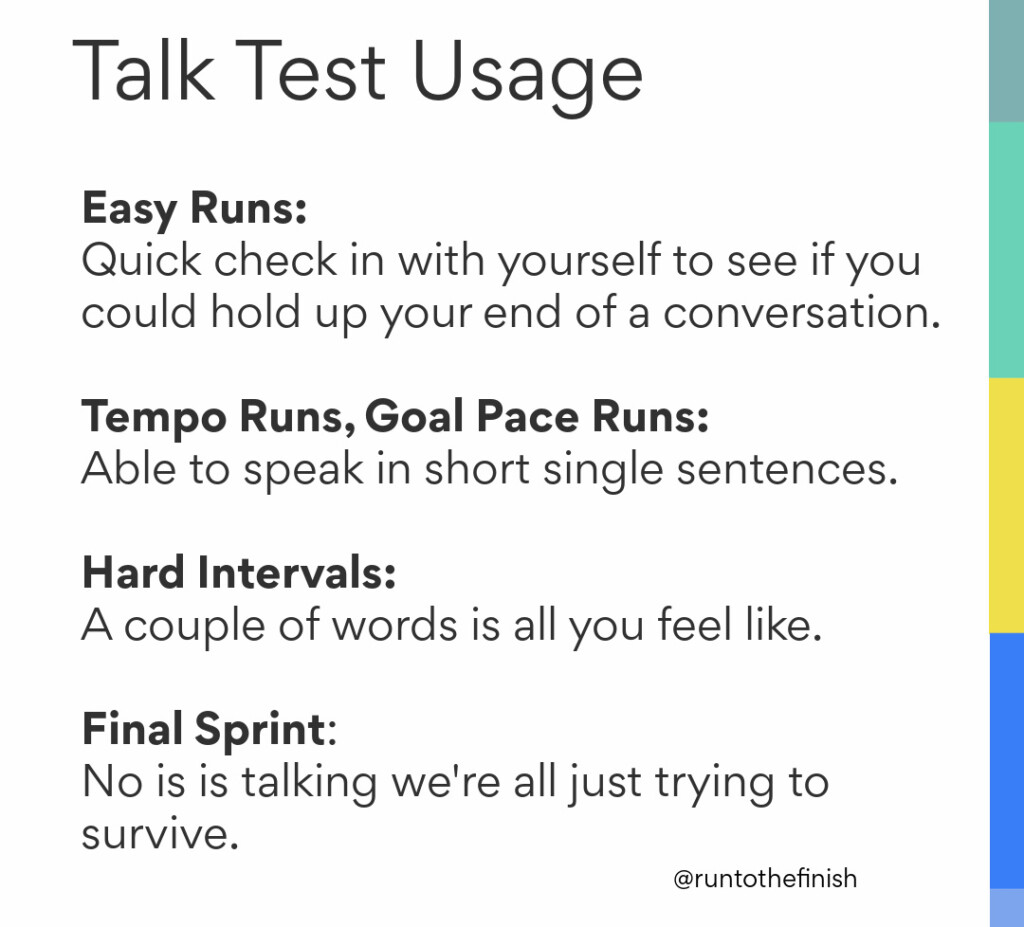
The goal is to build up your aerobic base, that’s what helps you run longer without sending your heart rate through the roof.
When your heart rate stays lower during easy runs, your body doesn’t have to work as hard, which means you recover faster and avoid feeling drained all the time.
Here’s a few friendly reminders when it comes to easy run days:
- Stop paying attention to the pace on your watch
- Start paying attention to your rate of perceived exertion (effort level)
- Hot, humid running will feel harder and you will need to slow down more
- Some days in running simply feel easier or harder, using perceived effort allows you to continue building every day by adjusting your pace and getting in a good run.
- Allowing your runs to start feeling easier also makes it mentally easier to try going farther.
- Remember, these are training runs, not race day. Your pace should be slower.
One of the best tools for this is Low Heart Rate training, which I have talked about extensively. It may take a while, but I firmly believe in this type of training because I’ve personally seen how it can make a tremendous difference.
3. Utilize Walking to Build Endurance
I’m not talking about run-walk intervals (though it’s a great way to train).
This is about adding walking to your routine, which does so much for allowing your body to get used to more time on your feet! Think of midday walks, lunch break strolls, or walks with your four-legged friend.
Running along side one of the speediest man I’d ever met in 2009, I was shocked when he told me his very expensive coach ordered him to start more walking AFTER finishing long runs.
Validation that all my walking is more than just free transportation! And indeed a tactic I began using as a coach years later.
So lace up those walking shoes and head out to get some extra daily steps!

Why does walking help running endurance?
Let’s look at why I’ve found it so helpful:
- Walking builds endurance (consider it extra credit training)
- More time on your feet during training ensures you are race-ready even after the expo and site exploring on race weekend
- It utilizes the same muscles without the impact
- Walking eases low back pain (an issue of many of us spending long hours at our desks)
- Walking strengthens your feet
- Walking up large hills activates the glutes without raising the heart rate raising intensity
Adding some walking to your routine might just help you run farther and faster by building leg strength, increasing lung capacity, reducing stress and burning extra calories.
Easy ways to do this are to add a mile of walking to the end of a run, take a lunchtime walk, or grab the family for an evening walk.
4. Follow a Smart Training Plan
Plan hopping (or having no plan at all) is one of the most common new runner mistakes. We think “ahh I’ll just do a little more each week” and that should do it.
In some ways, yes…but that’s not the whole story.
A well-structured schedule is going to help guide you through easy runs, rest days, how long to run, how/when to run hard, and cutback weeks.
Consistency is the secret sauce of endurance. Aim to follow your training plan as consistently as possible. It’s better to have multiple weeks of moderate effort than sporadic intense training followed by burnout.
Not sure where to start? Don’t stress, we have some ideas:
- 5K Walking Plan (seriously, it’s a good place to start)
- Couch to 5K Plan
- What to Do After Couch to 5k Training
Focus on Gradual Progression (Be Patient)
Imagine endurance as a marathon, not a sprint. Just as you wouldn’t attempt a full marathon on your first day of training, building lasting endurance requires time and incremental progress.
The runners who stand atop podiums didn’t get there overnight. They honed their endurance through unwavering patience and tireless persistence. By embracing the process and allowing yourself to evolve over time, you’ll likely learn a lot more about yourself and what’s truly possible for you.
So don’t worry about your weekly progress, look at in months and years.
5. Keep a Training Journal
Nothing will keep you on your journey like celebrating all of your progress. Don’t worry about what anyone else is doing, every time you go a bit farther without stopping that’s a win!! Celebrating those moments helps build momentum that keeps you going.
Keep a training journal to track your progress, including distances, paces, and how you feel during and after runs. Regularly review your training data to identify trends, strengths, and areas for improvement.
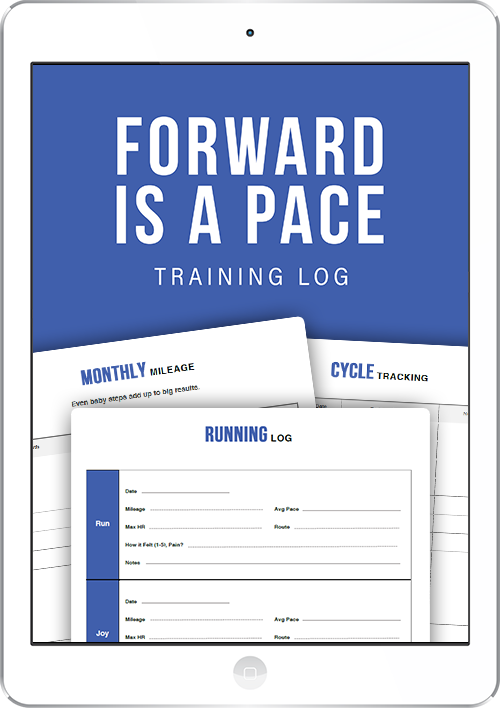
This information can also help you to adjust your plan based on your observations and how your body responds. Maybe you find that 2 days in a row of running leaves you wiped out, but you can easily do a run one day and go biking the next day.
6. Include a Dynamic Warm Up
Running is hard. Right?
Your heart starts pumping super fast, all of your muscles need to immediately go into action and ideally, you won’t feel like the Tin Man.
All of that can be easier if you start to include a warm-up in your routine. It’s nothing super complex, but spending 5-10 minutes loosening up the body will help prevent your HR from going sky high right away AND make everything else feel better as well.
Checkout these dynamic stretches warm up for ideas >>
Remember, NO STATIC stretching before your runs!
7. Include Strength Training Every Week
Strength training isn’t just for bodybuilders; it’s a tool that benefits all runners. Engaging in regular strength workouts helps to strengthen muscles, joints, and connective tissues to endure the strain of running.
Strength training doesn’t just build muscles; it improves your neuromuscular coordination. This means your muscles work more efficiently together, leading to better movement mechanics and reduced energy wastage.
A stronger body is more resilient, capable of maintaining proper form, and better equipped to delay fatigue.
Our goal is both to build a body that’s more efficient, one that has more power and doesn’t hurt! Most common running injures are a result of having weak hips, glutes or core!
- Activate glutes workout
- Core workouts for runners
- Upper body workout for runners (provides more power for uphills)
- Hip strength workouts (again more power in your stride and less injuries)
- Complete Strength Training Plans for Runners
Start with 2-3 sessions per week, focusing on exercises that target major muscle groups. Bodyweight exercises like squats, lunges, push-ups, and planks are excellent choices.
Gradually introduce weights or resistance bands as you become more comfortable. Remember, it doesn’t have to be crazy complicated workouts. Simple movements can have a huge impact.
8. Beat Running Boredom
This one rarely enters my mind, but I hear it so often “how do you keep going, I just get so bored!”
Of course, you aren’t going to keep pushing the distance if it’s boring,g and why would you? A few ways to make it more interesting:
- Running in new places, while paying attention to what’s around you
- Try trail running – this will also help your endurance when back on the roads
- Practice my treadmill boredom beaters
- Ask friends to run with you
- Join a running group
- Don’t try to run daily, mix in other cross training activities
- Listen to audiobooks or podcasts instead of music
9. Prioritize Rest and Recovery
According to a study published in the Journal of Applied Physiology, the actual act of exercising isn’t what improves fitness and endurance. It’s the repair and rebuild phase that does.
Think of sleep as your body’s reset button. During deep sleep, your body repairs damaged tissues, consolidates memories, and releases growth hormones. Prioritizing quality sleep not only boosts your energy levels but also supports your body’s ability to recover from the physical demands of running.
In 2021, a study published in the International Journal of Sports Physiology and Performance showed that seven to nine hours of sleep is ideal and you might need more as an athlete.
In fact, a lack of sleep can not only negatively affect your performance, but also your metabolism and appetite.
So, always remember the importance of rest and recovery during your endurance-building journey and make sure to get enough sleep.
10. Fueling and Hydration
Last but not least, the two things always are important regardless of distance is fueling and hydration.
A review in the journal Sports Medicine published in 2019 states that appropriate nutrition improves athletic performance, conditioning and recovery.
Focus on a diet that is rich in healthy carbohydrates such as whole grains, rice, potatoes, and bananas.
Don’t worry to much about carb-loading unless you are reading this with the goal of running a half marathon or greater distance. For your average weekly run under 60 minutes, you’ll be just fine having eaten a small snack of 30-45 grams of carbohydrate before workout.
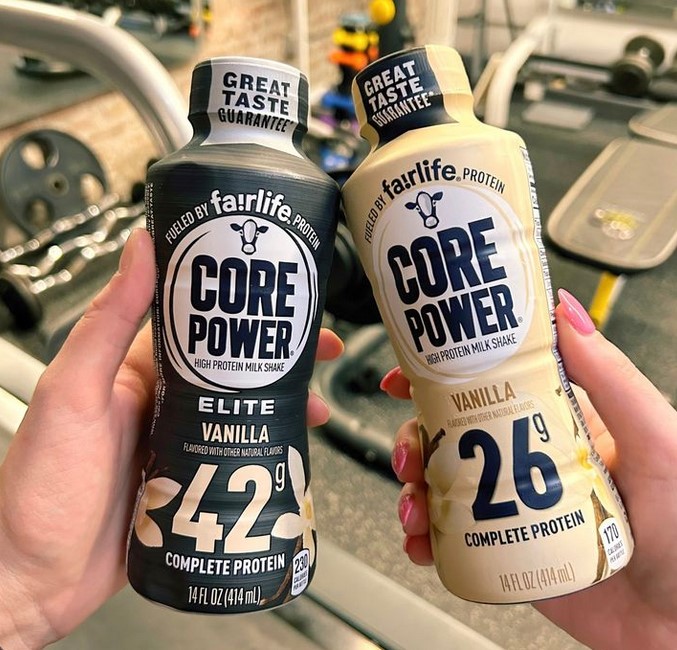
Grab a piece of toast with some peanut butter or a bottle Core Power and you’re set!
Even if you’re doing everything right, if you happen to be dehydrated, you’re going to feel weak, fatigued, and mentally exhausted.
Studies from the National Strength and Conditioning Association have found that being proper hydration before, during, and after training can not only enhance performance, but also delay fatigue.
And don’t forget your electrolytes, even if you don’t sweat a ton! Having balanced electrolytes in your body can help prevent muscle cramping, fatigue, and decreased performance. Plus they encourage you to drink more fluids, which makes it easier to stay on top of.
Still Struggling?
I didn’t start talking about interval training or running form here because those simply aren’t the first things that you need to know when trying to run without getting tired.
But if you are past the point of just starting and looking to increase distance, then you’ll see them in a marathon training plan and they are valuable.
On a recent episode of the Tread Lightly Running Podcast, we discussed the topic of fatigue resistance and how to avoid slowing down at the end of your race.
I highly recommend listening, whether you’re just starting out your running journey or are well seasoned in the miles.
Truly, I cannot recommend enough getting access to a running coach when you’re in the process of building so that you can do it safely….and not waste time on mistakes that cause injuries.
✅You can even join our Virtual Run Club for access to all 8 running coaches and courses!
Other ways to connect with Amanda
Instagram Daily Fun: RunToTheFinish
Facebook Community Chatter: RunToTheFinish
Sign Up to Receive a Weekly Newsletter with Top Running Tips and Laughs



 The Adidas Adizero Boston 13 Has One Major Flaw (And We Still Love It)