

Running a mile can be viewed as both easy and insanely difficult, depending on your perspective. A full tilt run to beat your own average mile time is gut wrenchingly hard and often leaves you wondering if your time mile time is average or perhaps better??
 After high school many of us don’t spend much time working on our mile time. But that could be to the detriment of our goals to run a marathon or half marathon or 5K PR!
They say, “Never judge a run by the first mile.” I agree. And with that said, new runners should never judge their potential by the first timed mile they ever run. If any of us had done that, we probably would’ve quit right then and there.
But how long does it take to run a mile? What are the fastest mile times on record? What are average mile times by ate?
Keep reading, and I’ll answer all those questions and maybe a few more!
Quick Stats:
Ok some quick hits to give you info, but read on for more nuance!
- 1 mile is equivalent to 5,280 feet or 1.609 km.
- The average beginner runner will run a mile in 10-12 minutes.
- The average mile time for men aged 18–30 is 7:30.
- The average mile time for women aged 18–30 is 8:43.
- The fastest 1-mile run time is 3:47.
How Long Does It Take to Run a Mile?
As every running coach loves to say “it depends”. The time it takes to run a mile depends on several factors, including your current fitness level, running experience, and the intensity you can sustain (which is often mental).
However, with proper training and consistency, you can significantly reduce the time it takes to run a mile.
There are a number of factors that play into how fast a person can run a mile:
- age group – without consistent training, our pace per mile decreases with age
- gender – noted below, there are some physiological differences
- effort – are you racing the mile or simply going out for an easy run?
- fitness level – impacts muscle, power, and coordination
- external factors: weather conditions, altitude, and terrain
Determining the time it takes an average runner to run a mile is tricky since there’s no database with all of those times somewhere. We can look at data from sources like Strava or Garmin, but those aren’t necessarily comprehensive.
On average, it takes a beginner runner around 10 to 12 minutes to complete a mile. As you get more experienced and improve your fitness level, you can expect to run a mile in 8 to 10 minutes. Elite runners can run a mile in under 4 minutes.
Again the data here is not conclusive on in if we’re talking about a hard timed mile or just our average per mile pace. We know that elite marathon runners can hold a 5 minute mile, which is different than folks trying to break 4 minutes in a single mile.
Average Adult Mile Run Times
Let’s look at times for running a mile as hard as we can, whether in a mile race or time trial.
According to a study published in the Journal of Strength and Conditioning Research:
- average mile time for men aged 18–30 is 7:30
- for women in the same age group, the average mile time is 8:43
- beginner mile times for men are more like 9:25 to 11:08
- beginner mile times for women are more like 10:40 to 12:30
As age increases, so does the average mile time.
- Men aged 30–50 have an average mile pace of 8:26
- Women in this age group have an average mile pace of 10:08
What is a Competitive Mile Time?
The current world record holder for men is held by Hicham El Guerrouj. He ran a 3:43:13 in 1999. On the women’s side, the current world record mile time is 4:07:64, held by Faith Kipyegon in 2023.
Of course, Nike is also launching their breaking 4 project now to see if she can be the first woman to go sub 4 in June of 2025.
- Competitive runners in their 20’s and 30’s will be around a 5:50 mile
- Elite runners in their 20’s and 30’s will be around a 5:10 mile
- As noted above this time increases with age making the biggest jump from our 40’s to 50’s going from 6:19 to 6:49
- We anticipate this time dropping as more people are continuing to run for longer and longer
As you can see, the time it takes to run a mile really varies. Elite athletes, especially those who specifically race the mile, train to run the mile at the impressive paces we see.
For most of us, though, running a mile is often just part of another distance we’re running, be it a training run or a race. I think the biggest thing to remember is that a mile is still a mile, no matter how long it takes you to run it.
Average Mile Times for Kids
If you grew up in the U.S., you may remember running the mile in gym class throughout your childhood. Mile times for young teens depend on similar factors as adults. More experience and increased fitness often mean a faster mile time.
Average times based on experience for
- 10-year-olds range from 7-12 minutes for girls and 6-11 minutes for boys.
- Age 15 t times drop to 6-11 minutes for girls and from 5 minutes to just under 10 minutes per mile for boys.
- The high school record is still held by Alan Webb (18 at the time), in 2001 at 3:53.43 and holding the American record at 3:46.91 in 2007.
Meanwhile, in 2021, middle schooler Josiah Tostenson ran a 4:23.98 at the NSAF Nike Outdoor Nationals in Eugene, Oregon. Blistering!

What Impacts How Long it Takes to Run a Mile?
Above I provided a quick list of factors that can impact your mile pace. So let’s dig in to each one just a bit more to help you decide what your expectations should be.
Age Changes Muscle
As we age, there are several changes that occur in our fast-twitch and slow-twitch muscle fibers. These changes can have a significant impact on our ability to perform physical activities and participate in athletic events.
Fast twitch muscle fibers, also known as type II fibers, are responsible for quick and powerful movements, such as sprinting and jumping. On the other hand, slow twitch muscle fibers, or type I fibers, are responsible for activities that require endurance, such as distance running.
A study published in the Journal of Applied Physiology, found that with age, there’s a decline in the number of fast twitch fibers and an increase in the number of slow twitch fibers. This shift results in a decrease in power and an increase in endurance.
The study also found that this change is more pronounced in men than in women.
In addition to changes in fiber type, there is also a decrease in muscle mass and strength as we age. This decline in muscle mass is called sarcopenia and is due to a combination of factors, including decreased physical activity, hormonal changes, and oxidative stress.
It’s important to note that these changes in muscle fiber type and muscle mass can be prevented or slowed down with regular exercise and physical activity. SO DON’T SKIP your strength training or plyometrics!
Checkout these keys to running as we age >>
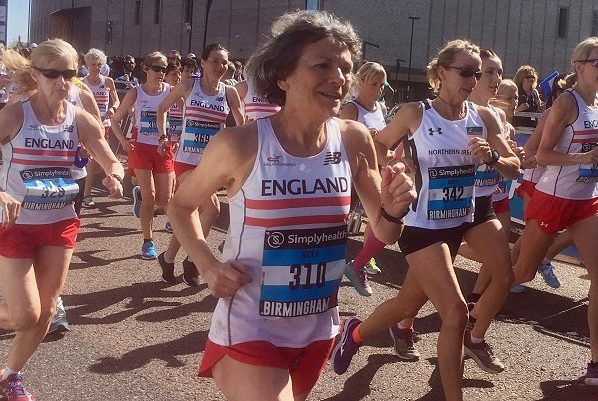
Differences Between Male and Female Runners
You may notice when looking at race times for men and women that male runners tend to run faster. This is true for elites, but often also true for teen and adult intermediate runners.
In a previous article, I’ve detailed some key differences between men and women that contribute to the differences in running paces, so I’ll only do a quick summary here.
Heart size: Men’s hearts tend to be larger, allowing them to pump more oxygenated blood where it’s needed most faster.
Lung Size: Women’s lungs are smaller than men’s, allowing them to get oxygen where it’s needed most faster.
Body Fat: Women have more body fat for biological reasons meaning our bodies have to work harder to run at a particular pace.
Muscle Differences: Men have more fast-twitch muscle fibers, which are used for speed. However, women have more slow-twitch muscle fibers making us good at longer distances.
Effort Level of a Given Run
Here we’re getting into a similar discussion to is a 10 minute mile good?
Of course! And it all comes down to you personally, along with the goal.
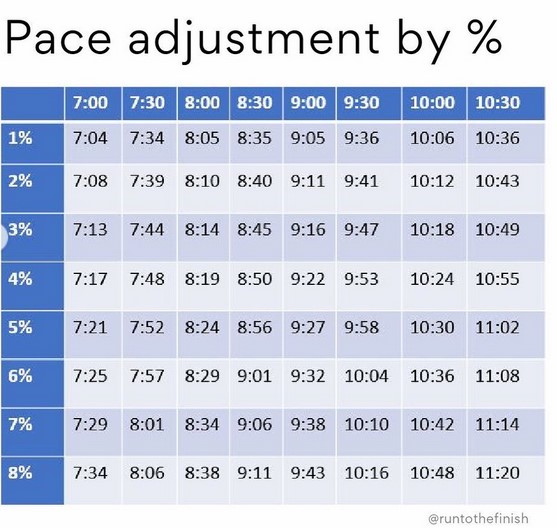
If you’re looking simply at a general mile time as a training pace, that’s going to be significantly slower than for racing. In fact, we often say that your easy training pace should be up to 2 minutes slower than your marathon pace. And absolutely at least that much slower than your 10K or 5K pace.
In doing a recent mile time trial, I found my mile pace to be about 3 minutes to 4 minutes faster than my average pace for an easy run, which makes sense because easy paces change day to day based on energy levels, muscle fatigue, etc.
External Factors
You really can’t compare a mile on the track to a trail mile or even a mile on rolling hills compared to a flat surface.
If you are looking to run your fastest mile, it’s ideal to head to the track or use a treadmill on a 0% incline.
You’ll also find that things like running at altitude most certainly make a difference. In doing more mile time trial testing, I can shave off 20-30 seconds by going from my normal Colorado runs to sea level in California.
And 1 million percent adding both heat and humidity to a run is going to make it harder, leading to a slower pace. It increases your HR from the start, which means you have less room to really push yourself before maxing out. It’s actually calculated by understanding dew point.
How Long is a Mile?
Did you know that until 1.9 miles or 3KM, you’re still considered to be running a sprint or speed event?! That’s why this is part of the track and field system. So in case you’re new to the track, a little breakdown.
One mile is the equivalent of:
- 5,280 feet
- 1,760 yards
- 1.609 km
- The elevation of Denver, CO (if you wanted to go vertical!)
- About 4 laps of a typical track
And even though a mile is not so very long, I’m sure many of you would agree that it can feel very long when we’re pushing ourselves to our limits!!!
Other ways to connect with Amanda
Instagram Daily Fun: RunToTheFinish
Facebook Community Chatter: RunToTheFinish
Sign Up to Receive a Weekly Newsletter with Top Running Tips and Laughs



 8 Ways Running Can Help Reduce Stress And Anxiety