
Comparing Nike vs ASICS running shoes could largely be described as a difference in fit and feel, along with some company philosophy if you care about those things (which a lot of you do in this case). Nike might be a behemoth in the sports world, but ASICS is no slouch. Let’s find your perfect shoe.

ASICS is well known for their sponsorship of many large marathons and long partnerships with athletes like Deena Kastor.
In the last 20+ years of running and writing shoe reviews, I’m happy to say that I’ve run in a WIDE range of shoes from both brands. There are models I hated, ones I loved and a bunch in between that were just fine, but not my perfect shoe.
Both brands provide high quality shoes and offer a variety of models to suit different needs like overpronation, cushioning, and trail running.
Today, I’m going to give you a breakdown with an overview of features and then we will compare shoe models side by side.
Nike Vs ASICS Key Differences
Asics and Nike offer similar features and models for all kinds of runners, from the new runner to Ultramarathoner to the flat-footed or high-arched.
Largely we’re looking at how a maximal shoes compares to a traditional running shoe.
I break down the differences in more detail below, but here’s a quick overview:
Nike Running Shoes
- More narrow fit, especially in the heel and midsole
- Tend to run smaller in width and length than many other brands
- A larger focus on newest and trendiest technology to “improve running economy”
- Known across a wide variety of sports and highly visible in competition
- Loves to be high fashion
- Has a large brand loyal following
ASICS Running Shoes
- More narrow fit, especially in the heel and midsole
- Famous for its GEL technology, which provides shock absorption
- Seems focused on shoes to prevent injury
- Designs a variety of shoes for many different sports
I’ve worn both brands and will add some personal thoughts, along with links to detailed reviews.
If you’re looking for other comparisons, checkout ASICS Vs Mizuno or Hoka vs On Cloud or Hoka Vs Saucony.
Nike Vs ASICS Running Shoes
Now that you know more about each brand, let’s look at their top models in each of the main categories. There’s no winner declared here because all are great shoes, it’s just about which one is best for your foot.
With each of these, they are the top models so numbers are constantly changing as they make a little upgrade.
Quick note, I absolutely encourage you to checkout Nike’s return policy! It makes it much easier to test out a shoe and return if it doesn’t feel right.
Stability Running Shoe
👉ASICS GEL Kayano
The GEL Kayano is now in its 32nd iteration and known as one of the best stability shoes on the market. Great for overpronators seeking stability, the GEL Kayano is an ideal shoe for marathons.
It’s more cushioned than most stability shoes and thus has remained a favorite of many runners for a very long time. To be clear, it’s not that plush max cushion feel, but a moderate underfoot feel that allows for pronation correction.
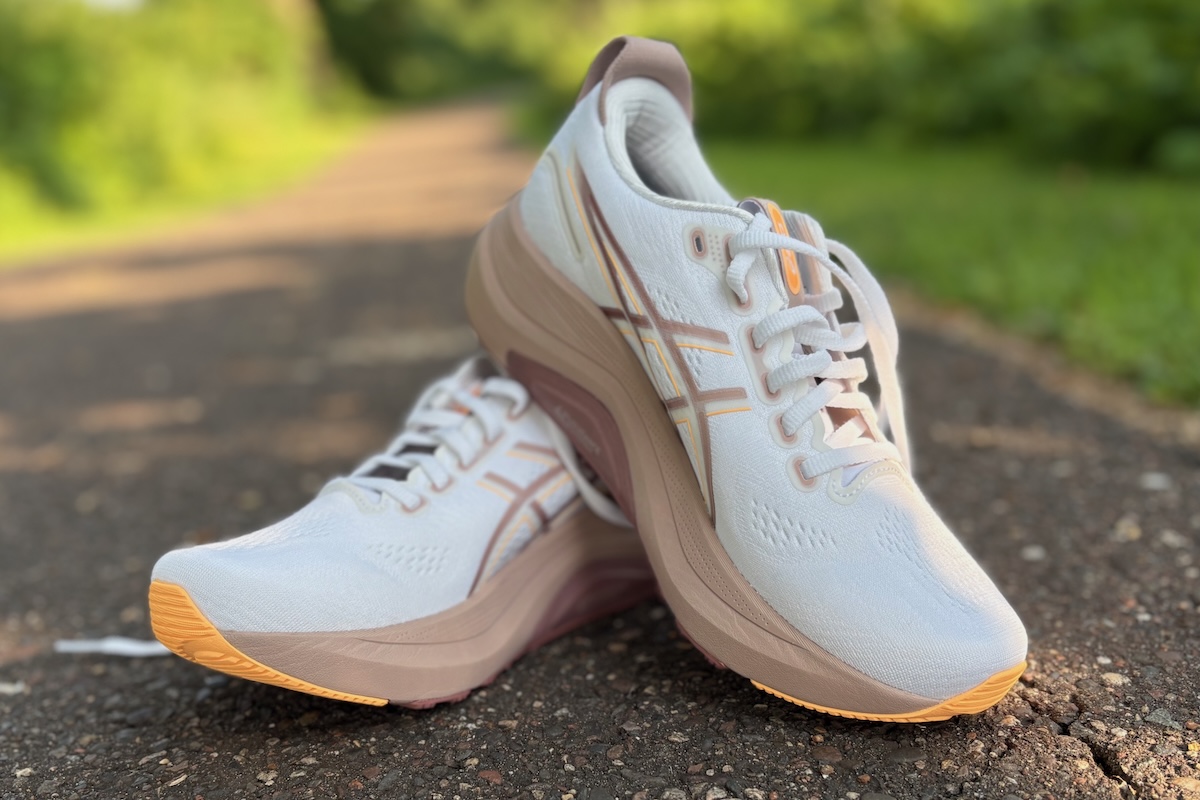
The fit is in line with most shoes, but you will notice a bit more of a heel lock. This is again to help with that foot pronation without over correcting.
- Weight: 10.7 oz Men’s, 9.1 oz Women’s
- Stack Height: 40 mm
- Heel Drop: 8 mm
- Available in nine colors
- Available in wide and narrow
- Available at Asics.com for $165.00
- Read our full review of the Asics Gel-Kayano 32 here >>
👉Nike Structure 26
Nike has updated their line up and you’ll find that the Structure is their new series for stability shoes, replacing the Invincible line up. According to Nike, the Structure 26 is the go-to choice for runners seeking stability and cushioning. They removed the previous models AirZoom profile and added a full length ReactX midsole.
In terms of support, Nike has shifted away from rigid posts and instead uses its Midfoot Support System, which wraps the foot in two areas; the lateral rear heel and the medial midfoot. This delivers guidance and stability without ever feeling overbearing.

And you’ll appreciate that support, because the Structure 26 carries its highest stack height to date—38 mm in the heel with a 10mm drop.
- Weight: 11.3 oz Men’s, 9.2 oz Women’s
- Stack Height: 38mm
- Heel Drop: 10 mm
- Available in 6 Colors
- Available in wide
- Available on nike.com for $145
- Checkout our full review of the Nike Structure 26 >>
Neutral Running Shoe
👉Asics Novablast 5
The Novablast has been a winning max cushion shoe from Asics since it first launched and they have continued to increase the amount of cushion in the shoe, while working to drop the weight. It’s not going to be the plush shoe you’ll see below, but it’s a great amount of cushion in a weight that’s going to translate to a lot of miles for the average runner from training even to race day.
The 5 has a completely new full length midsole with their FF Blast Max foam. Again, I like that this shoe is a more responsive cushion and you don’t sink in to it so much.
While this is a neutral shoe, with no guiderails or anything for stability, it absolutely has some of that built in to the design. The width of the platform from toe to heel reduces pronation and provides a really good ride.
- Heel toe drop: 8mm
- Weight: 7.9 oz women’s, 9.1 oz men’s
- Stack Height: 41.5mm
- Read my full review of the Asics Novablast 5 >>
- Available at RunningWarehouse.com $160 (my favorite for easy returns) and on Asics.com
👉 Nike Pegasus 42
The Pegasus remains a well priced daily trainer that is going to be extremely durable, carry runners through a lot of easy miles without feeling heavy or clunky. It’s not a max cushioned soft trainer, that goes to their Vomero line up, and it’s not a speed workout shoe, but it can pick up the pace.
Nike is leaning hard into the idea of “more energy return” with the Pegasus 42, thanks to a full-length Air Zoom unit.
Unfortunately, one change I noticed immediately was in the fit due to the new last.
The last is what the shoe is built on and thus changes its fit. After adding more cushioning under the forefoot, the shoe now felt too small and way too tight in the toebox.
Everyone wants the bounce or cushion right now, but I love that the Pegasus is staying true to this line of shoes. It’s got plenty of tech in it and looks flashy, but really it’s a great basic daily trainer.
- Weight: 10.6 oz Men’s, 8.6 oz Women’s
- Stack Height: 37 mm
- Heel Drop: 10 mm
- Colors: 6 colors
- Available in wide: Yes for some colors
- Available at nike.com for $145
- Read our full review of the Nike Pegasus 42 here >>
Cushioned Running Shoe
👉ASICS GEL Nimbus 28
Ready for some serious cushion to cover the miles or just for an easy recovery run? The inclusion of FF Blast foam and GEL offers cushioned support that’s hard to beat.
It’s not a snappy shoe, but for the crazy stack height it is stable and will work for our heavier runners. The wider base creates stability without the stiffness of a traditional stability shoe.
We think it’s a great fit for those wanting a long run or easy run day shoe. It’s not your fast run shoe, but an excellent choice for a 5 hour marathon to have cushion and support.

The midsole is still FF BLAST™ PLUS ECO cushioning, made from 24% bio-based materials to keep moving toward a goal of sustainability.
- Good for recovery runs, longer miles for middle and back of the pack
- Weight: 8.5 oz women’s, 10 oz men’s
- Heel Drop: 8mm
- 4 colors
- Not available in wide
- Available at Asics.com for $170
- See our full Asics Gel Nimbus 28 review >>
👉Nike Vomero 18
While it looks like a beast of a shoe, I can guarantee that it does not feel heavy or clunky underfoot.
The top layer ZoomX foam is a PEBA foam, meaning that it’s lighter and has more energy return. Traditionally PEBAX is not as durable, meaning less mileage before a shoe wears out, but they’re layering it over top of their ReactX foam.
The pods around the outsole are there to help with stabitliy and a smoother heel to to transition.

After our testing, the Nike Vomero 18 is going to be a max cushioned trainer for the middle of the pack and back to truly enjoy your easy days and long runs.
- Weight: 9.3 oz women’s, 11.5 oz men’s
- Heel drop: 10mm
- 6 colors available
- Not available in Wide
- Available at Nike.com $150
- Read our full review of the Nike Vomero 18 here >>
Carbon Fiber Plate Shoes
Are they cool new technology, yes.
Do they last as long as your other shoes, nope.
So if you want to test these out use them for speed work and then race day!
👉Nike ZoomX VaporFly 4
This shoe is great for runners chasing PRs, those who are looking for an extra pop on race day, and anyone who loved the Vaporfly 3 but wanted something even lighter and more aggressive.
In our opinion, it is best for the half-marathon distance and below. However, you could get away with wearing it for the marathon.

The Vaporfly has been interesting over the years because it’s not unusual for one person to love a model an someone else to love the previous model. In testing the 3, I was frustrated with the outsole and it looks like that hasn’t had much of an update here. So durability is still a concern.
That being said the 4 is fast and light and another iteration of speed. It’s always had the feeling of running on rails and being narrow, that continues here and is maybe even a smidge more noticeable.
- Weight: 6.7 oz Men’s, 5.3 oz Women’s (Unisex sizing)
- Heel Drop: 6 mm
- Available in 3 colors
- Not available in wide
- Available on Nike.com $260
- Check out our full review of the Nike Vaporfly 4 here >>
And more importantly a comparison of the Nike Alphafly vs Vaporfly. Which is the right race shoe for you?
👉ASICS Metaspeed Sky
The Metasped Sky is a maximum cushioned carbon fiber plate for the marathon runner in you. It’s going to give you both that feeling of comfort over the miles along with the pop that’s often lost in a highly cushioned shoe.
We did find that like many carbon plated shoes it doesn’t feel super stable, so if you have any ankle issues or need that wider base probably not a good fit. It’s also most ideal for the front of the pack forefoot to midfoot strikers.
It’s not a back of the pack speed shoe, you won’t get the benefits because your gait is different.
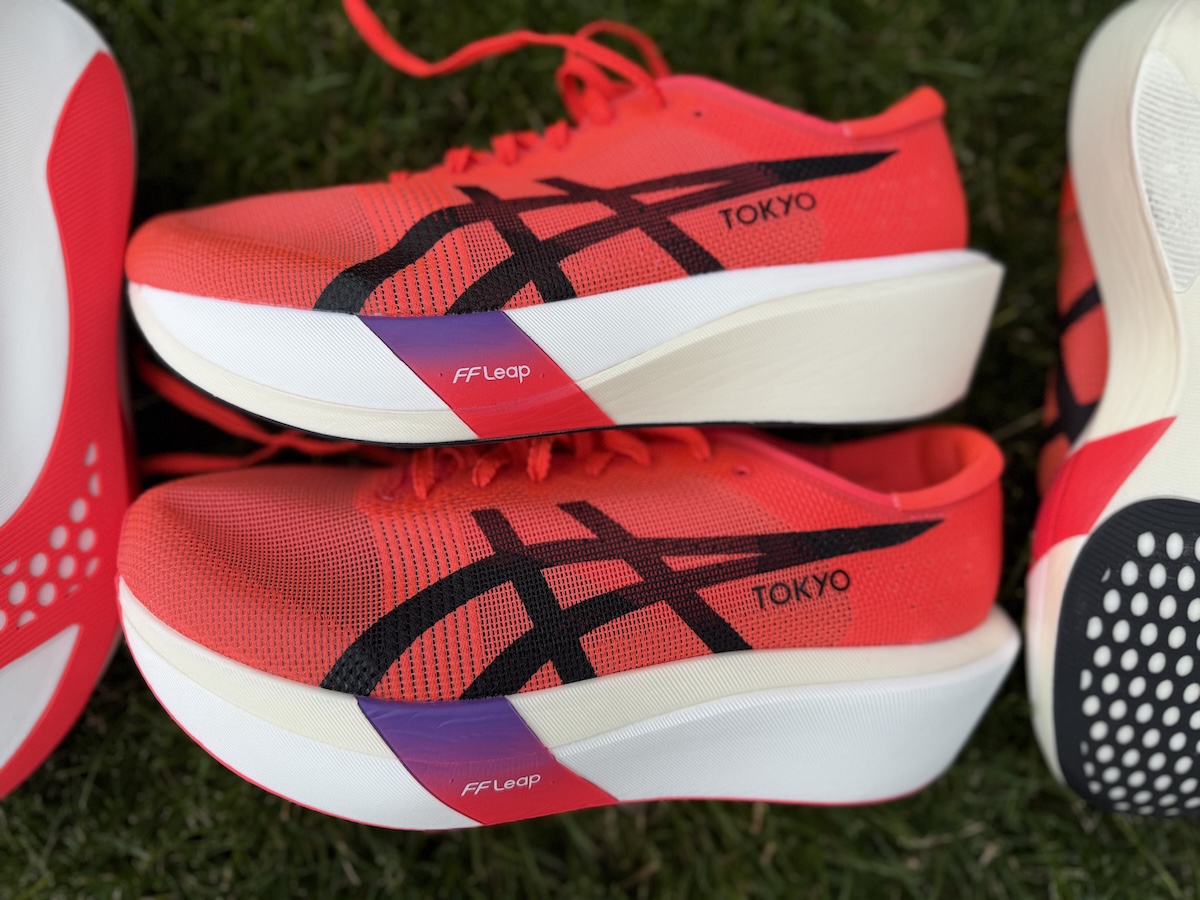
- Weight: 5.8 oz Unisex sizing
- Heel drop: 5 mm
- 4 colors
- Not available in wide
- Available from Asics.com for $250
- Read our guide to understand the Asics Metaspeed Sky vs Edge
ASICS vs Nike Feature Comparison
Both brands have been around for so long they have model numbers in the 40’s, which means it’s often hard to get runners to switch from a beloved shoe. But if you’re new to them and trying to make a choice, hopefully this helps.
Both offer options to aid with comfort, support, stability, and cushion. Where they differ most are in the feel and fit of the shoe while running.
The following breaks down each shoe based on the components buyers need to consider when purchasing a running shoe.
It’s gonna get a little TECHY…so you can just skip on down to the specific model comparison if you want, but personally if I’m shelling out $150 for shoes, I kinda want to know why.
Durability
The lifespan of shoes from both companies is fairly comparable.
- ASICS recommends swapping out for new shoes every 450 to 500 miles.
- Nike’s Vapor Fly is only going to give you about 200 miles, but most shoes are in the 300-500 mile range. (I will say some of my favorite Nike’s are definitely on the lower end of lifespan compared to other shoes.)
Determining when to replace running shoes, of course, all depends on your gait, weight, and whether you run mostly on trail or road.
Shoe Fit
ASICS shoes have a more snug fit, particularly in the heel and midfoot. Though still not as narrow as Nike. An external heel clutch delivers targeted fit and support, while the Gel technology allows for foot movement in various directions as the foot transitions, reducing heel strike.
While ASICS also features a shoe fit guide, it takes a little sleuthing to find (you’re welcome).
Nike running shoes are often reported to run small. I would say this is hit or miss for me. Some shoes seem totally fine and others, I absolutely wish I had a half size up. No rhyme or reason to which shoe I notice it most in.
They do not offer the variety of widths that you’ll see with New Balance. But if you like the fit, you’ll find it fairly consistent across models.
Cushioning
ASICS uses Flytefoam technology that provides bounceback and responsiveness with each step. It gives a bit less energy return than say Brooks shoes, but the two technologies are fairly similar.
The company has been using their famous Gel technology for more than 30 years. It works well to absorb the shock with each step.
Nike started putting air in their shoes back in 1977 to improve cushioning.
“Nike Air technology consists of pressurized air inside a tough yet flexible bag and provides more spring without compromising the structure.”
And since the 90’s they’ve been recycling waste material from production in to new shoes. They continue to look at this sustainability in developing new shoes.
However now, their big thing is ZOOMX foam. I wrote about it in-depth on the Nike Invincible review.
Nike ZoomX cushioning is Nike’s latest innovation in running technology.
It’s a cushioning system that provides lightweight, responsive cushioning for a faster and more comfortable ride.
Made from a unique foam material that is 30% lighter than traditional foam and is designed to provide maximum energy return, allowing runners to go farther and faster. The foam also provides a softer landing and smoother transitions from heel to toe.
Stability
ASICS shoes provide stability through a dual density midsole system called Duomax, which enhances support and stability. That, along with the external heel clutch allow the foot to continue its natural movement while running.
Nike does say their stability shoes are slightly wider and also designed with a curve that will help with heel to toe transitions.
As you may know, I’m not a huge fan of stability shoes for most runners. I am not finding a big difference in brands, they are all focused on preventing that foot roll and often feel a little stiffer

Overview of heel to toe drop and type of cushion in most shoe brands.
Affordability
The prices between the two brands are fairly comparable.
- ASICS prices range between $110 to $160
- Nike start at $120 to $180
Specialty items with more features (like carbon plates) will increase price.
You’ll notice that every brand offers a range and this is indeed due to a difference in technology and where they sell the shoe. They know that the big box store can sell the shoe with less in it, while the local running store needs to be best for dedicated runners.
How to Choose ASICS or Nike Running Shoes?
Now that we’ve gone through the different models, you have a better feeling for what sets each apart. I can’t recommend enough that you buy knowing you can take them out for a few runs and return.
Seriously, return policies are pretty amazing.
And remember: Your gait and feet will likely change over time and you may need to change shoes.
This is also why I recommend rotating through several pairs of shoes at once.
Keep in mind that shoe design can change, even with the same model, so always assess how the shoe fits every time you replace a pair.
For more help selecting the right shoe for you, don’t worry, I’ve got you:



 What’s the Fuss about Peak Week Marathon Training?