

Will running with weights help you to build muscle, while building your endurance?? If it sounds too good to be true… I think you know where this is going.
While the additional weight means your body must work harder to propel yourself forward, forcing the heart to pump harder to increase blood flow, it does NOT mean you’ll be building muscle or overall improving your performance most of the time.
One of the main issues is that it can drastically change your running form.
All right, so having said that should you just skip the idea all together…
I’m gonna say for most runners yes. BUT there are some benefits when done safely and correctly, so let’s dive in to give you the full picture and make a choice for yourself.
Why Run With Weights?
Studies show mixed results in performance with the addition of weights, most specifically with weighted vests. While there does seem to be evidence of some benefit, there are far superior ways to improve strength and endurance for running.
Many runners choose to run with weights, and for very specific types of training goals there are indeed a number of benefits. But whether or not those benefits are worth the cost for the average runner is what we need to determine next.
In the meantime, let’s look at what these benefits are.
Burns Calories
According to the American Council on Exercise (ACE), using 1-3 pound hand or arm weights during aerobic exercise can help you burn up to 15% more calories. The same data is often reported for running with a weighted vest.
What does that mean?
Say on a normal 30 minute walk you burned 150 calories. For the extra effort of the vest you would get an additional 22 calories, yup that’s it! Getting up from your desk for a couple minutes is going to create that same effect with less heart stress.
Increased Workout Intensity
You can intensify your workout by running while carrying weights. Wrist or ankle weights can add 5-10 beats per minute per run.
If you are specifically an endurance athlete training for an event where you need to pack in a bunch of gear, then this makes sense. You need to give your body a chance to adapt to the feeling of the added weight and how a hike is going to feel 10-20% harder than normal.
However, if the goal is speed then you’ll get more benefits from doing a speed workout than training your body to better run with additional weight.
Improves Bone Health
Running with weights will increase the load that your bones carry. Extra loading can increase bone mass by prompting osteoblasts to lay down new bone material. To put it simply, bones get stronger and denser to support the added weight.
In this case, I am not opposed to walking with a weight vest. Especially some incline walks, when you are thinking about how to improve bone health because that’s a lower impact training option.
But as noted below the risk to bones is also high when running with weights. Let’s look more at that.

Risks to Running with Weights
Running with a training vest comes with some benefits, but the problems it also comes with might make you rethink if this is something you should include in your training plan.
The biggest issue with running with weights is that it throws your gait off due to added load to the joints such as your hips, back, and knees.
This can lead to joint damage and pulled muscles while simultaneously also increasing load impact on knees, ankles, hips, spine, etc.
And while many claim cardiovascular benefits, it has not been proven to elevate Vo2 max. Plus, it can disrupt your overall balance and be only mildly beneficial to performance.
- Increased injuries stem from the added stress to your hip flexors and IT band
- Changes in biomechanics can also result in low back pain, patellofemoral syndrome, IT band syndrome, lower extremity joint pain, cartilage degeneration, and muscle strains.
- Weight is transferred to the bones and joint cartilage when muscles are unable to support the sudden increase in weight.
- The extra weight causes stress fractures or joint pain in those tissues, and stress fractures of the foot and hip are common in runners who end up overtraining with weights.
Even little aches and pains can become more significant when you’re carrying extra weight around and lead to other more serious injuries. Honestly, it’s one of the reasons Dr’s often advise those with joint pain to lose weight if above a certain threshhold.
The risks of running with weights outweigh the possible benefits for runners.
Different Types of Weights for Running
There are several different types of weights to choose from for those who wish to add weights to their runs, but I hope you see pretty quickly there is only ONE OPTION that isn’t going to lead you to injury.
Before I directly address those concerns, let’s look at what’s available from the torso to lower-body options.
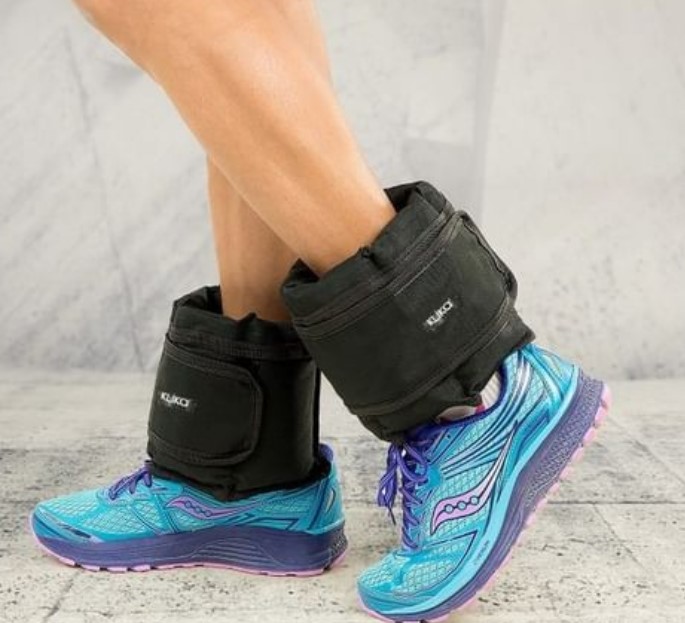
Ankle weights: These are small sandbags that you wrap around your ankles with a Velcro strap.
Wrist weights: They are similar to ankle weights, but you wrap them around your wrists.
Dumbbells: These are the regular dumbbells we use for weight training.
Weight vest: As the name suggests, these are weighted vests to add extra weight around your body for more resistance. Some vests include the option of adding or removing weight plates.
These are the most common types of weights that are used while running, but there might be other options out there such as wearing a backpack with added weight.
Let’s look at all the specific questions you have about whether or not to run with weights, starting with some ankle weights:
Should You Run with Ankle Weights?
Running with weights on your legs can increase calorie burn slightly, but only if you can keep running!
They notoriously cause a number of injuries, which means you won’t be running and will thus be burning far fewer calories.
- Place strain on the ankle, knee, and hip joints, leading to injury
- Alter running mechanics
- Your feet will land harder with each step from the added weight
- Gait changes can lead to pulled tendons and ligaments
If someone has told you ankle weights are great for running faster, just put that idea to the side and focus on ways that will help you build leg strength without injury, like hill repeats and tempo runs.
Similarly, don’t strap this to your wrist and go for a run either. It’s going to change your arm swing and similar to ankle weights, this repetitive movement, and extra weight can lead to joint and tendon injuries in the wrists, shoulders, elbows, and neck.
Should You Run with Dumbbells?
Dumbbells essentially work the same as wrist weights, but since they’re held, there’s more room for user error. Incorrect use can cause poor running form, leading to:
- Muscle soreness and injury
- Imbalance in the core, causing spinal, hip, and knee injuries
- Exaggerated arm swing
- Change in stride
- Added impact to knees, ankles, feet, and hips
- Tendon and ligament damage in shoulders, neck, and spine
I actually don’t mind if you want to walk and do some movements with dumbbells. Then you’re working on endurance with your upper body, but again, you still aren’t getting the same benefit as you would simply doing a full-on strength workout.
Try this upper body workout designed with runners in mind as an alternative to running with dumbbells.
Should You Run with a Weight Vest?
Commonly referred to as ‘military-style’ training, running with a weighted vest has become more popular since the rise events like Spartan races.
It has also become quite popular amongst CrossFit athletes for their WODs. It makes sense that a vest is an easy way to increase the intensity of a pull-up, push up or other bodyweight movement. Some people wear vests to boxing classes or use them with gym equipment like stair-steppers during a cardio workout.
Weight vests train the body to apply greater effort while running to help build stamina and muscular endurance.
When you run without the vest after getting used to it, your body continues to apply the force required to run at your normal pace with that weighted running vest.
Plus, running while wearing a weighted vest will increase the load being passed through your bones.
When your skeleton is put under more stress through this extra loading, it can cause cells called osteoblasts to lay down new bone material in response. This can lead to more bone mass.
To put it simply, bones get stronger and denser to support the added weight.
 Pictured here is Hyperwear vest.
Does Research Back Running with a Weight Vest?
While these are a lot of benefits that do occur, the reality is that studies show mixed results on the actual effectiveness.
A 2017 study of 19 Spanish soccer players showed a minimal increase in 30-meter sprint performance for those wearing a vest 2.1% of body mass over a six-week period.
Another study in Australia revealed similar results. The subjects wearing a weighted vest for three weeks showed some improvement in running time (2.2%), while peak power and running velocity remained virtually the same among the control and test groups.
More research is needed on running with a weighted vest to determine its effectiveness correctly.
This does not mean that running in a weight vest isn’t beneficial overall, but that we need to understand further how it can improve our performance as a runner and what the risk factors are.
Some other benefits of running in a weight vest may include:
- Help increase bone density, particularly in postmenopausal women
- May help improve your running posture
- Can help with weight loss when combined with the right diet and lifestyle choices
- Boost cardiovascular performance (most helpful for those doing Spartan where they often need to carry heavy weights)
- Improve balance if worn properly (again most helpful if you need to move quickly with weight)
- Distributes weight more evenly than hand or ankle weights
How to Run in a Weight Vest
Since many of you will want to still run in a weight vest, I thought it’s important to specify the sort of routine you should have.
It is important to ensure that the weighted vest is evenly distributed across your body. If the weighted vest slips while you run, it might create an imbalance and cause you to overcompensate on one side of your body.
Choose one that will fit you snugly and stay in place while you run. Look for one with an adjustable strap around the torso to get a good fit and where you can easily adjust the weights.
- Start out doing a walking workout. In other words, low intensity to build up your body’s ability to hold the weight.
- Remember that endurance athletes still need most of their miles to be easy, so this isn’t an all the time thing
- If you’re training for a specific event where you need to handle more weight, use this on your hard days
- Start with a lot less weight than you might think you need. Rather than rushing into something your body isn’t ready for, it’s always preferable to begin slowly and build your way up.
- Use the vest only once a week at first, then gradually increase the frequency to two or three times a week, depending on your goals.
For most runners, I would say skip the running with a weighted vest and instead use it on walks, particularly hilly and incline walks.
Then you’ll be increasing the intensity of those workouts, with less chance for injury due to form change or overstressing the body.
What About a Hydration Pack?
Does wearing a hydration pack count as running with weights? Well, maybe, kinda sorta, though I doubt your pack is holding 10lbs worth of gear.
And if it is then, I hope you’re training for a multi-day running event and need to become accustomed to that weight.
As with any vest, make sure you find a good running hydration vest or running belt that fits correctly. And I absolutely recommend them over carrying a running water bottle, which much like holding a light weight can actually change your arm swing.
Safety Considerations When Running in a Weight Vest
Should you choose to wear a weight vest while you run, understand that improper wear can result in injury.
- A weight vest should not exceed 10 percent of your bodyweight.
- Those with back and neck problems should avoid using weighted vests, as it can put pressure on the spine and cause disc degeneration.
- Ensure even distribution of weights around your body. Disproportionate weights can cause injury from favoring or overcompensating on one side or knocking you off balance causing a fall.
- Make sure the vest fits comfortably and snugly. Shifting can throw off weight and cause imbalances.
- Build up to maximum weight. Start with 1-2 lbs and gradually increase the amount of weight over a few weeks.
- If, at any point, you feel pain in your joints or other nagging pains, stop using the vest and visit your doctor.
Does Running With Weights Build Muscle?
One could argue that by running with weights you’re strengthening the exact muscles you use while you run, and while that is true in some regard, it’s not the whole picture.
Adding extra weight to your runs is not the most effective way to build muscle strength, build muscle, or really give you those toned arms. Why? You aren’t using enough weight to break down the muscle and cause it to repair, which is how you build muscle.
Consider your reason and goal for carrying weights during your run. Is it to gain strength? Endurance? Resistance Training?
You can achieve that more effectively by doing more targeted strength training, long runs, and speed workouts.
I’ve got heaps of strength training resources for you, many of which can be performed at home:
- Heavy Lifting for Runners Program
- 10 Online Resources for Training at Home
- Does Running Tone Your Legs?
- 27 Body Weight Strength Workouts for Runners
Other ways to connect with Amanda
Instagram Daily Fun: RunToTheFinish
Facebook Community Chatter: RunToTheFinish
Get more running tips: Pinterest



 7 Tips for How to Run Faster and Longer: Speed and Endurance
Thanks for this very informative post! I never thought about running with weights myself but I was wondering if this is a good idea in general… now I know more!
I guess I understand the theory behind it. But, it seems sorta dangerous to me. I dont road run anymore only trails and would never think of adding weights even if they were secure. Too concerned about injuries.
My place of work has a gym. Has some decent free weights for my strength training (deadlift, bench press, squats and standing military press + some farmer carry variants). There is one guy who has dumbbells while running on the treadmill. It’s against the rules and I am reluctant to rat him out to the authorities. Heck, if you want to kill yourself, you are one your own. I dont use the treadmills so if he trashes it, no look out for me.
totally agree that carrying them while running is a great way to get injured. I think the major benefit tends to be for Spartan racers.