
Are you ready to take your running game to the next level? Whether you’re a seasoned marathoner or just starting your journey as a runner, honing your running form is key to unlocking your true potential.
Picture this: a runner gliding effortlessly through the finish line, with each stride propelling them forward with power and grace (you know those beautiful elites). That’s the result of a well-mastered running form—a symphony of synchronized movements that not only improve performance but also reduce the risk of injuries.
Running is often seen as a simple act, but the truth is, there’s an art to running with finesse. It’s not just about pounding the pavement with sheer force; it’s about embracing the fluidity and rhythm that come with proper form.
Imagine your body as a well-tuned machine, each joint, muscle, and ligament must work in tandem to propel you forward. By focusing on key aspects of your running form, such as posture, foot strike, arm swing, and cadence, you can tap into your body’s natural mechanics and unlock a newfound level of performance.
In this article, we’ll dive into some essential running form tips that will transform your running experience, helping you maximize efficiency, speed, and overall enjoyment.
Should You Change Your Running Form?
After nearly two decades of running and coaching, I’ve digested the assorted recommendations, eliminated the quacktastic one’s and settled on a few tweaks for running injury free without added stress.
Correcting your running stride shouldn’t be a massive overhaul, that’s too much for your brain to handle. There’s also a lot of data to show that it may be unnecessary.
We all run a little bit differently and it turns out that’s ok.
“Many people are advocating for various ‘optimal’ running forms, but this study (in the International Journal of Exercise Science) shows even novice runners shouldn’t try to run any different than their body naturally does,” study co-author and USA Track & Field consultant Iain Hunter said in a press release.
Enjoy running, and worry less about what things look like.”
Basically the study proved that when you try to lengthen or shorten your stride to fit a “perfect ideal” you end up using a lot more energy.
Instead of focusing on how far to move your legs, let them flow and think about these little running mechanics instead. The biggest one that is going to change your stride is to improve your running cadence! The speed at which you move your feet.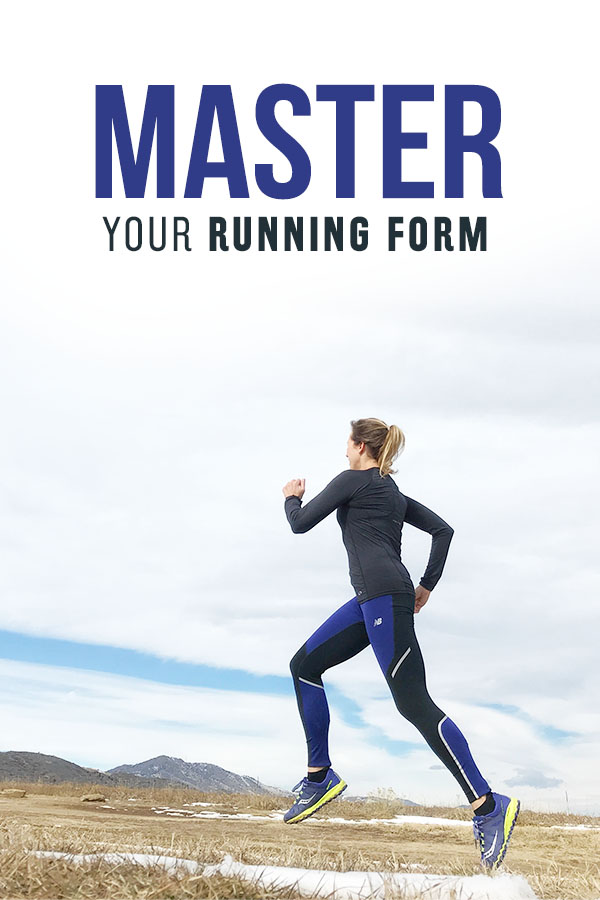
Proper Running Form Cues
These simple tweaks do not require you to change your stride, pick new shoes or add time to the workout. One of the issues I have with so many running form recommendations is they want you to stray from your natural stride.
Our primary focus in any changes to your form is to reduce injury rate and help you increase efficiency. We can do this by focusing on just a few key pieces.
During each run, spot check your form using these 4 running form tips. To help you remember them better, I’ve created the acronym STAR.
- S: Shoulders
- T: Tall
- A: Arms
- R: Relax
Let’s look at each of these in more detail and trust me by the time you’re done reading this article, this acronym is going to come in handy every time you want to improve your running form!
1. Relax Your Shoulders
For most people one of the first places to noticeably feel tension is the shoulders, if yours are beginning to resemble earrings it’s time to relax.
We tend to sit at our computers all day, which leads to a natural posture of rounded shoulders.
In the same way, we tend to round our shoulders while we’re running and feeling fatigued. And what happens because of it? You close off your airways.
To correct this start by:
- Take a deep breathe and sigh, you should feel your shoulders drop immediately
- Throughout the run do this to eliminate energy wasted in shoulder tension
- Dropped shoulders will open your chest up for better breathing while running
2. Stand Tall
As we begin to fatigue our natural inclination is to slouch thinking that we are letting our body relax.
This curved body position makes running harder because you’re not engaging the core, tightening the lungs and effecting you mentally. Try just slumping now for a second, it immediately makes you feel less energetic!
A good running posture is much like good posture the rest of the time! You want shoulders down, head high and core tightened.
- Pull up from the top of your head
- Stretch your arms diagonally up to help you stand tall, chest forward with just a slight lean from the ankles
- Chin parallel to the ground look forward, not down at your feet. You want to gaze straight ahead, instead of looking down at the ground or at your watch.
- A focused, forward gaze will also help you maintain a proper posture by keeping your neck in proper alignment with your spine
- Standing tall increases energy through better breathing and a body feeling that creates confidence
Tired of trying to figure this out on your own?
✅Checkout our 30 Days to Better Running Form course with daily videos and quick drills.
You’ll be running faster, reducing injuries and feeling stronger with just a couple minutes of drills before your runs.
3. Efficient Arm Movements
As a run coach, I’ve noticed many beginner runners hold their arms against their sides, up to their chest while running. Interestingly, this actually requires 12% more energy than letting them naturally swing.
Long-distance running form, such as the kind for running a marathon, is different from the form for sprints.
While sprinters need to pump their arms fiercely through a full swing, distance runners are conserving energy with small movements (see video).
Being an efficient runner for long-distance running is essential, you need to conserve all the energy you can so it can go to your legs.
Here are a few arm movement tips to keep you from swinging across the body or too hard, both of which can lead to IT band and other injuries.
- Imagine holding a butterfly wing or potato chip between your thumb and pointer finger
- Hands in a light fist with palms facing towards your body
- The thumb tip is thus pointed forward and the thumb knuckles towards the sky
- This hand placement helps to prevent cross-body arm swing, which is an injury magnet
- Arms should stay bent at the elbows at a roughly 90-degree angle, forward and back
4. Relax Your Body
How can you tell when someone is really concentrating? Their eyes narrow, their brow furrows, and maybe even their lips purse…
All of this might be great for communication, but on the run it’s lots of wasted energy that could be used for propelling you forward and farther
- Say to yourself “relax, let go” a few times during a hard effort
- Muscles you didn’t realize you were tense release, and the effort becomes much easier
- Relaxed muscles respond with an easier turnover, better stride, and less wasted energy
A video demo of the tips for how to correct running form that are detailed above.
How to Improve Running Form
Proper running form is a bit of a misnomer. As we’ve already said there is no perfect, but there are a few keys to things about which will reduce load on your knees and muscles.
1. Stop Overstriding
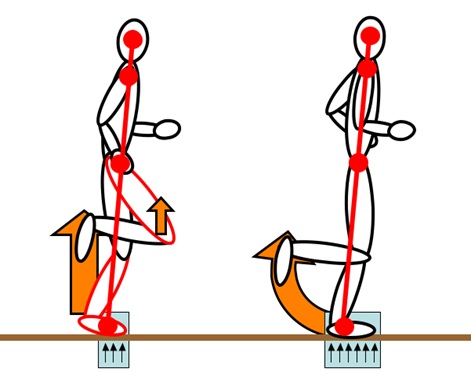
Running stride is not about lengthening your stride, rather it’s about quickening your turn over so your feet land right under you. In fact, this is the biggest and most important change you can make!
We aren’t talking about not heel striking!!
Heel striking is not inherently a bad thing. Plenty of runners do it because that’s how your foot naturally rolls from heel to toe. What we want to prevent is landing with your foot way out in front of your body. If you had a line from head to toe, your foot landing in front of the midline would be overstriding.
Ideally over time, we want to get the feet landing more directly under your center of gravity.
- Should you run on your forefoot? Everything you need to know about foot strike.
- Improve your running cadence
- Do running form drills before most runs – this creates a neural pathway in your brain to make it happen naturally
Learn all about how to evaluate your running gait >>
2. Don’t Bounce
Don’t bounce. To do this, imagine the ceiling is an inch above you and you don’t want to hit it.
Every time you raise too far off the ground you’re sending energy upward instead of forward. We want all of your momentum going forward, which is also why you often hear people talk about having a slight lean from the ankles.
3. Have a Slight Lean
Have a slight forward lean. This is one of the harder things for runners to master and why we teach techniques around it in the course.
You do NOT want to lean from your waist. The movement starts at your ankles and your body remains in a straight line.
Again this is something that you MUST do drills to work on and make it a natural part of your running.
See some forward lean drills to practice here >>
4. Keep Your Feet Flat
You want to keep your feet flat. Don’t run like you are wearing heels, aka up on your toes.
It can help for a while to imagine flexing your foot and landing on the whole foot. This is going to help you stop heel striking if your are landing in front of your body, because you will have to pull your foot closer to land with your full foot and get the most power out of your stride.
Aim to land with control by using a smooth and even foot strike.

5. Pay Attention to Cadence
Aim for a cadence of 170-180 footfalls per minute (more on this in how to improve running cadence) for most of your runs. You may find that easy days you are currently doing around 150, so the goal is to slowly increase that number and maybe you settle in around 165, that’s just fine!
While 180 is often sited as ideal, it’s not. Definitely read the article to understand where you should be and understand how it’s going to help you run faster and prevent injuries.
Faster running is about the faster turn over, not striding out.
6. Notice How You Feel
Pay attention to how you feel while running; if there is something wrong with your form, you’ll likely feel it.
Pain during or after running is a sign that you likely have a mobility or strength issue somewhere in your body.
7. Improve Mobility in Hips and Ankles
Speaking of mobility, it’s important to pay attention to flexibility and mobility in your hips as well as your ankles. This will reduce the chances of injuries in your lower back and knees.
If you lack enough mobility to go through the full range of motion in your stride then you lose power and other muscles have to take up the slack.
8. Strengthen Your Glutes
This is a must. Not a nice to do.
Often issues come from weak glutes or really tight quads and hips, which will decrease your range of motion and power.
For proper form, it’s necessary to strengthen and activate your glutes. This should be something do you prior to every single run in your warm up and something you focus on during your strength workouts each week.
You can find my favorite moves in the 30 Day Core Program.
What about Foot Fall?
While I don’t want you to get too in your head with running form, I know this is an area with a lot of questions. Is there a best running form for how we strike the ground?
Yes.
Is it on the ball of our foot, instead of the heel?
No, not exactly. Running up on your toes is going to create different issues.
This is a great visual for how your foot should land while running.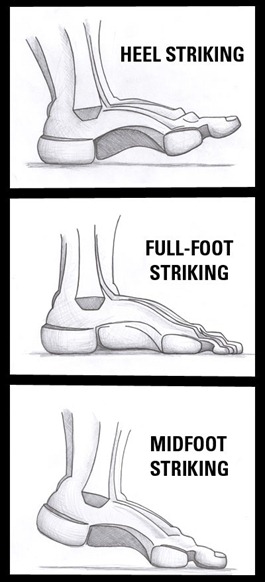 We’ve figured out that heel striking when overstriding is a big no no, that’s the one running technique we know leads to injury without a doubt.
When you land with your heel stretched way out in front of you, it acts like a brake sending a shock all the way up your leg and through your spine. Imagine doing that thousands of times in a single run and you start to see why it could result in knee, hip and back pain.
In fact, overstriding is probably one of the biggest reasons people swear they can’t run because it hurts.
Yeah, it hurts when you’re doing it horribly wrong. People are generally heel striking because they’re stretching their legs out super long with the idea that is how you run faster.
It’s not.
What is cadence?
Side bar to explain the whole reason we want to increase our foot speed.
Running cadence is how quickly you turn over your feet. We often talk about the ultimate goal being 170-180 for most runs and possibly faster when doing sprints or shorter races.
You run faster by picking your feet up off the ground more rapidly and leaning slightly in to your forward motion. AH HA. Instead of braking, you being to take advantage of gravity.
A new study actually showed a 10% INCREASE in your step rate can decrease knee pain!!
Let’s make this a more visual learning session with a new video on the best foot strike for running!
All right, back to your foot fall. You DO NOT want to be running on your toes, in other words trying to land on the ball of your foot and keeping your calves engaged for the entire run.
- Land with your foot directly below your body (practice marching in place to see how that feels)
- You will use your entire foot for the most force (think of it like pawing the ground)
- It can help to think about flexing your foot initially to get to a more natural footfall instead of heel or ball
- Eventually as that becomes comfortable you will start to land around your mid-foot which is ideal
Some people refer to this idea as ChiRunning, which is a whole concept of relaxed running that honestly can get a little convoluted if you dig in to it too much.
Overall, you want to find a way to run that’s relaxed and eliminates some of the key twisting or striking motions that can cause injury.
Common Running Form Mistakes and How to Fix Them
Here are some common running form mistakes and how to fix them.
Overstriding and Heel Striking
One of the most common mistakes runners make is overstriding and landing on the heel. This can cause unnecessary stress on your joints and muscles and slow you down.
To fix this, focus on taking shorter strides and landing on the midfoot rather than the heel. This will help you maintain a more efficient stride and reduce the impact on your body. Plus, try to keep your feet under your body when you land, rather than reaching out in front of you.
Another way to improve your stride, as mentioned above, is to focus on your cadence. Cadence refers to the number of steps you take per minute. Aim for a cadence of around 180 steps per minute. This will help you take shorter, quicker strides and reduce the impact on your body.
Excessive Bouncing and Vertical Oscillation
Another common mistake is excessive bouncing and vertical oscillation. This means that you’re wasting energy by bouncing up and down rather than moving forward.
Imagine you are running on a treadmill with a ceiling very close to your head. If you are bouncing then you’ll be crashing in to it repeatedly.
To fix this, focus on running with a lower center of gravity and using your arms to drive your forward momentum. Keep your shoulders relaxed and your arms bent at a 90-degree angle. This will help you maintain a more efficient stride and conserve energy.
Another way to reduce bouncing is to work on your core strength. A strong core will help you maintain a stable, upright position while you run, reducing the amount of bouncing and vertical oscillation.
Crossing Arms Over the Body
Some runners also cross their arms over their body when they run, which can throw off their balance and reduce their speed.
To fix this, keep your arms close to your body and swing them naturally at your sides. Your hands should move from your waist to your chest, not across your body. This will help you maintain a more efficient stride and reduce unnecessary movement.
Hunching Over and Poor Posture
Some runners hunch over and have poor posture while they run. Honestly, we’re tired as we run long miles and the body natural starts to droop. But, this can cause strain on your lower back and make it difficult to breathe.
To fix this, focus on standing up straight and engaging your core muscles. Keep your shoulders relaxed and your chin parallel to the ground. Imagine a string pulling you up from the top of your head, lengthening your spine. This will help you maintain good posture and breathe more easily.
Another way to improve your posture is to work on your flexibility. Tight muscles in your hips, hamstrings, and calves can contribute to poor posture while running. Incorporate stretching into your routine to improve your flexibility and reduce the risk of injury.
By focusing on proper running form, you can improve your performance, reduce your risk of injury, and enjoy your runs even more.
Still Struggling to Get a Proper Running Form?
This is an area that you will not and should not change over night. You’re going to make little tweaks to see improvements without throwing everything off.
Here are some ways to help you get on track.
Get a Gait Analysis
If you’re still struggling to achieve a proper running form, the best option is to get a gait analysis done by booking a session with a run coach or joining a virtual running club (we have connections with a PT who is offering them virtually at a ridiuculously low rate).
Sometimes getting someone else to see your form via picture or video can help you adjust those little things that make a huge difference.
Invest in Yourself to Get the Correct Running Form
As a certified running coach, I’ve seen hundreds of runners make mistakes that slow them down and even cause injuries. Having a proper running form is crucial for every runner and something that’s worth investing in.
Cadence, form, speedwork – all the running lingo can get really intimidating and overwhelming. These are all things runners are aware of, but not entirely sure how to implement or fix.
After a decade of working with runners, I designed a complete solution for you in the Running Technique Program.
You’ll receive a calendar with follow-along videos, that’ll provide you with the exact drills that will improve your form which will:
- Prevent injuries
- Run faster with less effort
It only takes 10 minutes a week to get the correct running form! To learn more, check out my Running Form for Beginners Program here.
Other ways to connect with Amanda
Instagram Daily Fun: RunToTheFinish
Facebook Community Chatter: RunToTheFinish
Sign Up to Receive a Weekly Newsletter with Top Running Tips and Laughs



 Fabletics Review: Is the Fabletics VIP Membership Worth It?
I recently wrote a post on this too! I do think about my form. While I”m a heel striker, I think my form is overall pretty good. You’ve got some great tips here!
The tips about relaxing your shoulders and other places of tension are great. Usually by mile 2 my whole upper body is tense and hunched over, and I’m working on being mindful of that and adjusting as I go.
http://www.slackergirlfitness.com
It’s one of the most common things we all do!!! Hopefully just being aware of it will help.
One of my favorite running form tips a coach once told me is to pretend you are holding baby chicks in your hands. This allows you to relax your upper body and prevent you from clenching your hands! It works really well!
One thing I noticed while watching elite runners, is the foot strike. Many times it is on the ball but then the heel fully contacts the the ground to fully load the leg in the stance phase. This happens so quickly with fast runners. In some ways, it reminds me of a motorcycle riding course I took long ago where the I instructor said , the only difference between professional roadracers and the club riders is how quickly they can go from fully upright to full lean in the corners, a key area where riders can gain speed. I think the speed at which these elite runners fully load the leg and release that stored energy is why they essentially “spend more time in the air” and therefore have longer stride length. High cadence is required too, and midfoot strike is the way to get the most benefit of this stored energy for most runners. The really fast ones though, are loading this energy much faster, mostly with forefoot transition to full foot. Just a theory from observation. :)
True they have a longer stride, but that comes with the pace too. Hard to have a long stride that’s not overstriding at the average runners pace, so it takes practice. And there are plenty of elites who heel strike too, they just land under the body so it’s not an issue :)